
If a Georgia court has raised electronic monitoring for your child, the first thing to understand is what it usually replaces. Juvenile electronic monitoring in Georgia is most often used as an alternative to holding a young person in secure detention. It is the reason your child comes home instead of staying somewhere else.
That reframing matters, because most parents hear “ankle monitor” and assume the worst has already happened. Often the opposite is true.
Why Would a Court Order Juvenile Electronic Monitoring in Georgia?
Because the system is built to use the least restrictive option that still works.
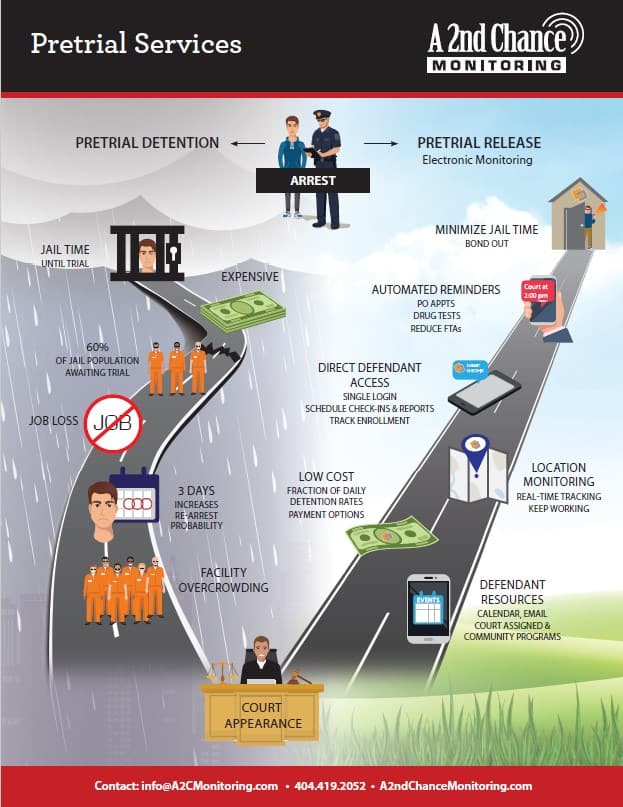
Georgia’s Department of Juvenile Justice uses a validated assessment tool to guide detention decisions, weighing the current allegation, any prior history, and risk factors to determine whether a young person needs secure detention, a non-secure alternative, supervised release, or simply to go home. DJJ policy states that youth who score low or medium should be given the least restrictive and most appropriate non-secure detention alternative available.
Electronic monitoring sits squarely in that category. DJJ policy explicitly names tracking and electronic monitoring as alternative detention programs. A juvenile court intake officer or the court itself makes the call.
Does Monitoring Mean My Child Has Been Found Responsible?
No, and this is the single most common misunderstanding parents bring into the process.
Juvenile court works differently from adult criminal court, including in its vocabulary. A case is decided at an adjudication hearing, not a trial with a jury. What follows, if the court finds the allegation proven, is called disposition rather than sentencing. Many young people wearing a monitoring device in Georgia are somewhere before that point entirely, with nothing decided yet.
Monitoring during that period is a condition attached to release while the case is pending. It is not a finding, and it is not a punishment. Your child’s attorney can tell you exactly which stage your case is in, and that answer changes what everything else means.
What Devices Are Used, and Will Everyone at School Notice?
This is the question parents actually want answered, usually within the first minute.
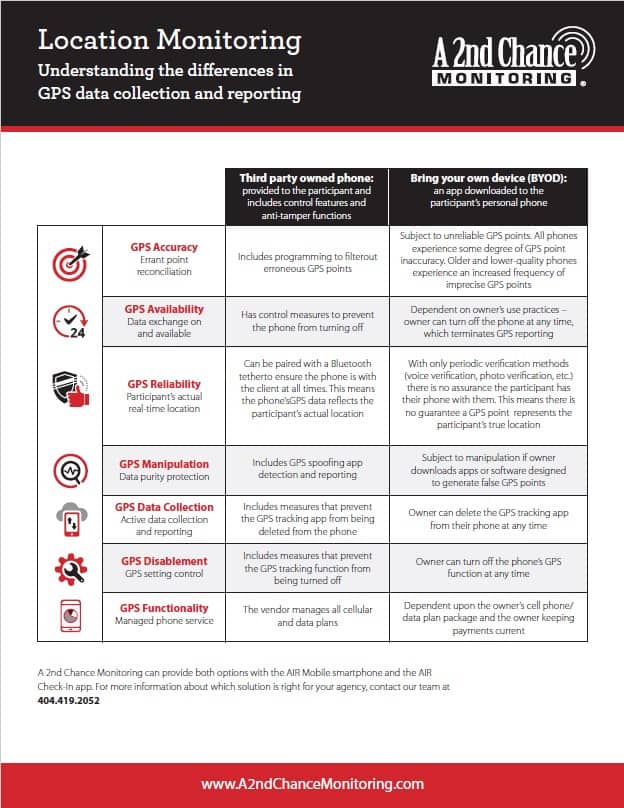
Ankle-worn GPS units are the most familiar option. They are designed to be worn under clothing, and a sock and a normal pant leg conceal one better than most parents expect. But there are less visible options that courts sometimes approve.
The BI VeriWatch is worn on the wrist and reads as a fitness tracker to anyone glancing at it, which is a meaningful difference for a teenager walking into a high school hallway. The Reconnect app runs on a smartphone and handles check-ins without any wearable device at all.
Which option applies is determined by the court and the supervising agency, not by preference. It is still worth asking whether a less visible option is available in your case, because nobody will volunteer that information if you do not ask.
What Rules Will My Child Have to Follow?
The specifics come from the court order, but the common conditions are predictable.
- A curfew, often tied to school and work hours
- Required presence at home during set times, which the device verifies
- Areas the young person may not enter, which can include a specific address or neighborhood
- School attendance, frequently monitored more closely than before
- Keeping the device charged and worn at all times
- Reporting to a supervising officer on a schedule
Our post on what to expect during the first month on electronic monitoring covers how the routine settles in, which for most families takes two to three weeks.
What Is the Parent’s Role in All of This?
Larger than most parents realize when they leave the courthouse, and this is where families succeed or struggle.
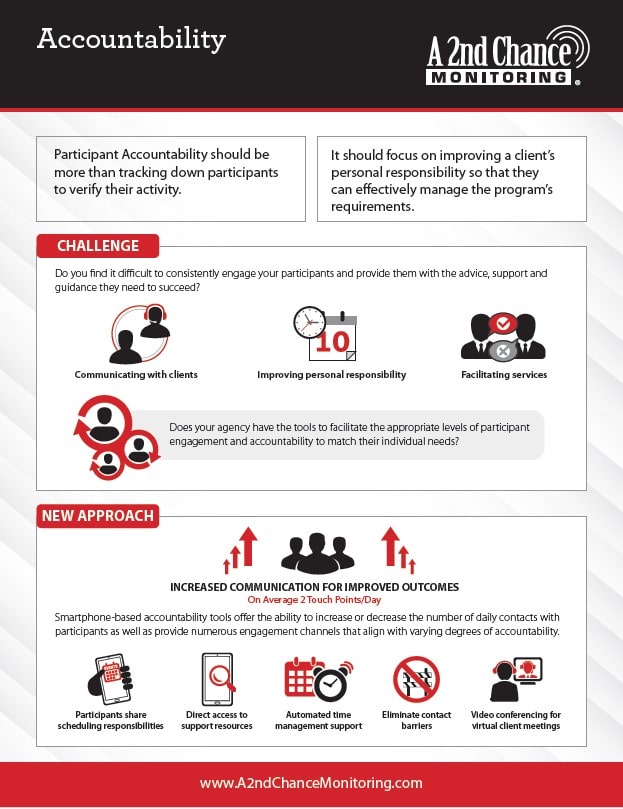
The charging routine is the practical center of it. A dead battery generates the same alert as a device that has been removed, and a teenager who forgets a phone charger will forget this one. Build it into a fixed time of day, in a specific place, with an adult confirming it happened. That single habit prevents most of the problems families run into.
Beyond that, you become the schedule. Approved absences from home for school, work, medical appointments, and religious services generally have to be arranged in advance through the supervising officer, not explained afterward. A parent who calls on Tuesday about Saturday’s schedule change is in a completely different position than one who calls Monday to explain Saturday.
Keep your own record. Note the date and time of anything unusual: a signal problem, a device alert, a schedule change you requested and who approved it. If a question comes up weeks later, your notes are the only version of events that exists on your side.
Can My Child Still Go to School, Work, and Sports?
Generally yes, and courts are usually motivated to make that work.
School attendance is almost always preserved and is often a condition rather than an exception. Employment and school activities can typically be accommodated with an approved schedule, though anything with an unpredictable end time, like a tournament or a shift that can run late, needs to be discussed in advance rather than assumed. Our post on working or going to school while wearing an ankle monitor covers how those approvals generally function.
Two practical points on sports specifically. Contact sports and swimming raise questions that depend on the device and the court order, so ask before the season rather than after a coach asks. And a locker room is the place a device is most likely to be noticed, which is worth thinking through with your child in advance rather than leaving to chance.
Who Can See My Child’s Location Data?
Location information goes to authorized parties connected to the case, which typically means the supervising officer, the case manager, and the court overseeing the matter.
Juvenile proceedings in Georgia carry confidentiality protections that adult criminal cases do not, which is one of the meaningful differences between the two systems. Those protections have limits and exceptions, though, and the specifics of who receives what in your case are worth asking the attorney directly rather than assuming in either direction.
Schools are a common question. Whether a school is informed, and by whom, depends on the court order and the circumstances. Ask rather than guess.
What Happens If My Child Breaks a Condition?
It gets reported, and then the court decides. It is not automatic.
The monitoring provider reports the event to the supervising officer and the court overseeing the case. Courts distinguish between a first minor curfew miss and a pattern of leaving during restricted hours, and between a battery that died and a device that was removed. Consequences can range from a conversation to a modification of conditions to a return to detention, and that decision belongs to the court.
What helps most is speed and honesty. A parent who calls the supervising officer the same morning to report a problem is presenting a family managing a situation. A parent who says nothing is presenting a family that hoped nobody noticed. Our post on what happens if you violate electronic monitoring in Georgia covers how the process generally works.
How Long Does Juvenile Electronic Monitoring Last?
As long as the court order says, which is usually tied to the stage of the case rather than a fixed number of weeks.
When monitoring is a condition of release while a case is pending, it commonly continues until the case resolves. When it comes later in the process, the duration is set by the court and revisited at review hearings. Either way, it ends by court order rather than by expiration, so ask at each hearing whether the conditions can be reduced.
Questions Worth Asking Before You Leave the Courthouse
Parents rarely get a second chance to ask these in the same room as everyone who knows the answers.
- What stage is the case at, and what does this device relate to?
- Which device will be used, and is a less visible option available?
- What exactly are the curfew hours and any restricted areas?
- How do I request approval for a schedule change, and how much notice is required?
- Who do I call when something goes wrong, and what number works after hours?
- Is there a cost to our family, and what is it?
- When will these conditions be reviewed?
Frequently Asked Questions
Why would a judge order juvenile electronic monitoring in Georgia?
Does wearing a monitor mean my child’s case has already been decided?
Do juveniles have to wear an ankle monitor, or are there other options?
Can my child go to school while on electronic monitoring?
What happens if my child’s device battery dies?
Getting Through It as a Family
Juvenile electronic monitoring in Georgia is demanding on parents in ways nobody explains at the courthouse. You become the charging reminder, the schedule coordinator, and the person who calls when something goes wrong. It is also, in most cases, the arrangement that allowed your child to sleep at home while a case is unresolved, and families who treat it that way tend to have a much easier time with it than families who treat it as an insult. Ask questions early, write things down, and call the moment something is off.
About A 2nd Chance Monitoring
We believe everyone deserves a second chance. A 2nd Chance Monitoring provides alcohol monitoring, GPS tracking, and communication services to help individuals stay accountable while they navigate legal requirements or work toward personal goals. With multiple locations across Georgia, Alabama, and Mississippi, our team offers professional support and reliable technology you can count on 24/7. Whether you’re fulfilling a court order or simply looking for structure during a difficult time, we’re here to help. Get in touch with us today.
The information in this article is provided for general educational purposes only and does not constitute legal advice. Juvenile court procedures, monitoring requirements, and conditions of release vary significantly by county, court, and individual case, and the juvenile system differs substantially from the adult criminal system. If you have specific legal questions about your child’s case, please consult a licensed attorney in Georgia. A 2nd Chance Monitoring provides electronic monitoring services and does not provide legal representation or legal advice.