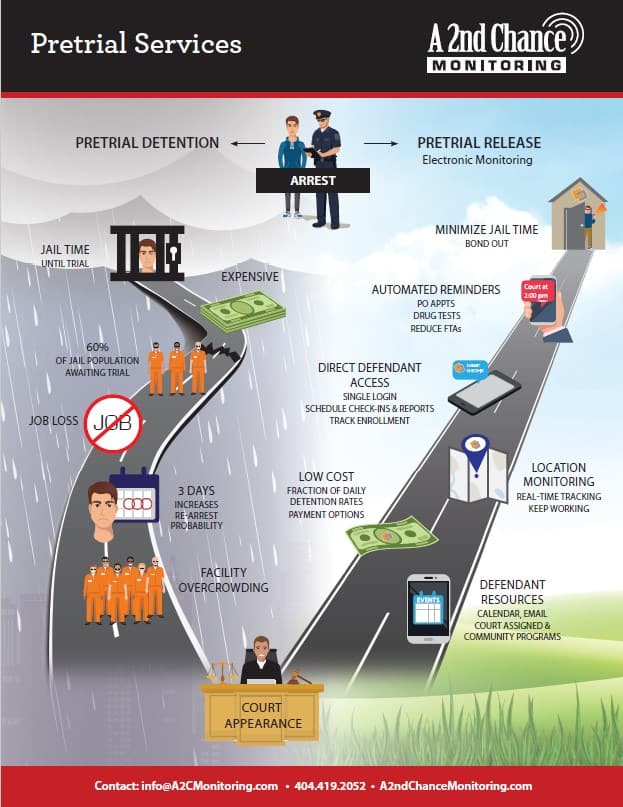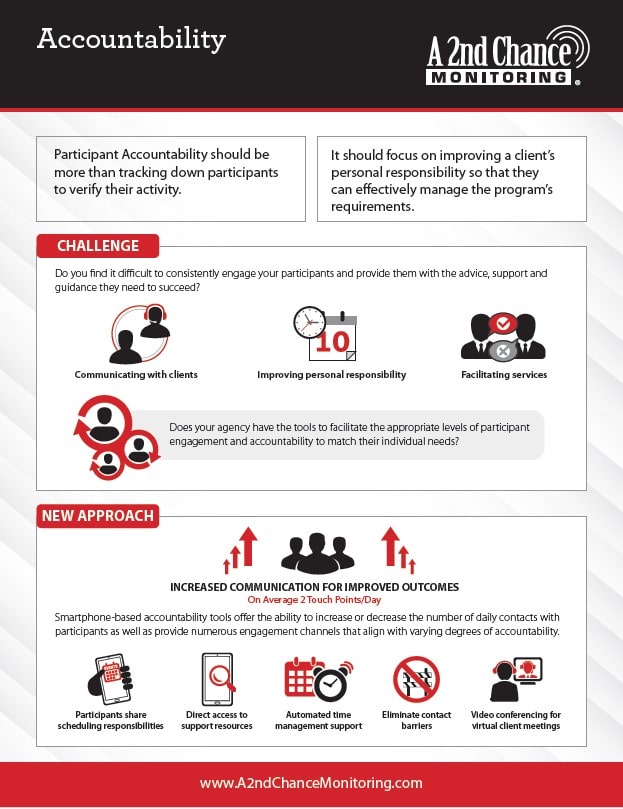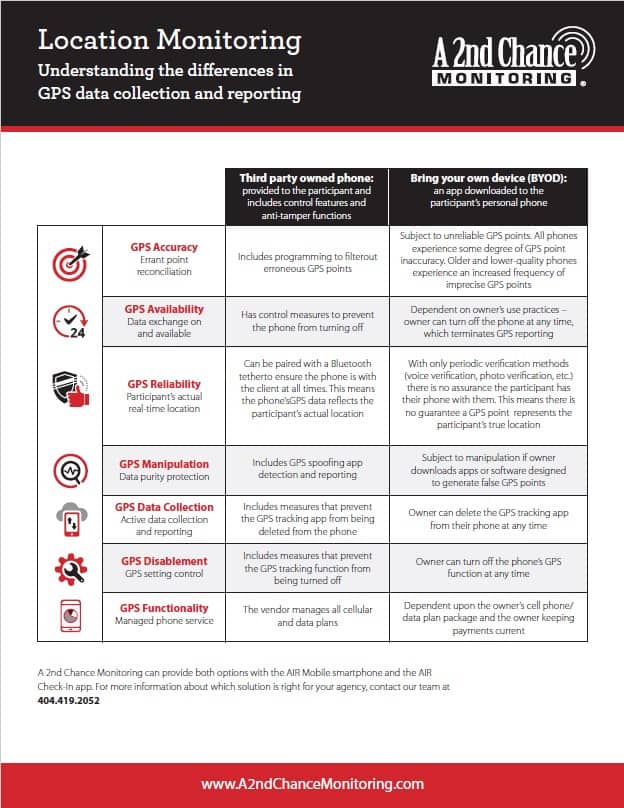

An electronic monitoring alert is a notification that something needs a look, not proof that you did anything wrong. Many electronic monitoring alerts trigger for harmless reasons, like a weak indoor signal or a low battery. This guide explains what these alerts are, why they happen, and exactly what to do when one comes up, whether you are pretrial, under supervision, or meeting another court requirement.
Here is the part most people never hear. An alert is not the same as a violation.
What Is an Electronic Monitoring Alert?
An electronic monitoring alert is an automatic notification sent to the monitoring center when a device detects something outside the expected pattern. That could be a location reading, a low battery, or a missed check-in. A person reviews it before any decision is made.
The device flags. The monitoring center reviews. Your supervising officer and the court overseeing your case decide what, if anything, happens next. A 2nd Chance Monitoring and its sister company, A 2nd Chance Bail Bonds, work together across Georgia so there is always someone paying attention.
Why an Alert Is Not Automatically a Violation
Plenty of alerts have completely innocent explanations. A trained reviewer sorts the real issues from the noise, which is why a person, not the device, decides what an alert means.
Signal loss inside large buildings, basements, and parking decks is common and expected. GPS can drift near tall structures. A low battery sends a warning well before the device powers down. None of these automatically means you broke a rule. What matters is that you are where you are supposed to be, or that any change was approved ahead of time.
Common Reasons Electronic Monitoring Alerts Happen
Most electronic monitoring alerts fall into a handful of categories. Here is the short version.
- Location. Getting close to or entering an area you are not approved to be in.
- Curfew. Being away from your approved location during restricted hours.
- Signal or battery. The device lost signal or ran low on power.
- Route. An unapproved stop or a significant detour between approved places.
- Device. A possible tamper reading, which is often a false alarm from a bump or a strap issue.
- Alcohol testing. A missed or late test on a SCRAM CAM or Soberlink schedule.
For a full breakdown of each trigger and how the system reads it, see our detailed guide on what triggers a GPS monitor alert.
What to Do When You Get an Alert
If your device alerts, stay calm and reach out. An alert is a prompt to communicate, not a verdict. Handle it the same way every time.
- Do not panic. One alert does not undo your progress.
- Check the obvious. Is the device charged? Are you at your approved location?
- Contact your supervising officer or A 2nd Chance Monitoring’s 24/7 support and explain what happened.
- Use the Reconnect app to message your supervising officer, check in, and create a record.
- Keep the device charging and stay put while you sort it out.
The single most important habit is communicating before a change, not after. If you know your schedule is shifting, ask for approval in advance. A quick heads-up prevents most problems.
How to Prevent Avoidable Alerts
You cannot prevent every alert, since some are purely technical. You can avoid most of the ones that are within your control.
Charge on a daily routine so the battery never surprises you. Follow your approved schedule. Get changes approved before they happen. Keep your trips direct. And report any device problem to your supervising officer and A 2nd Chance Monitoring early, before a small glitch looks like something bigger. For a step-by-step routine, see our six steps to meet court-ordered monitoring requirements, and if you are balancing a job, our guide to keeping your job on electronic monitoring can help.
Electronic monitoring alerts are part of how the system works, not a sign that you have failed. Handle them the same way every time: stay calm, charge up, and reach out. A 2nd Chance Monitoring reviews alerts 24/7 and works with you and your supervising officer to sort out what actually happened. To understand where alerts fit in the bigger picture, see our overview of what electronic monitoring is and how it works.
Frequently Asked Questions
Does an electronic monitoring alert mean I violated my conditions?
What should I do if my monitor sends an alert?
Why did my device alert when I did nothing wrong?
Who sees my electronic monitoring alerts?
Can I avoid alerts entirely?
About A 2nd Chance Monitoring
We believe everyone deserves a second chance. A 2nd Chance Monitoring provides alcohol monitoring, GPS tracking, and communication services to help individuals stay accountable while they navigate legal requirements or work toward personal goals. With multiple locations across Georgia, Alabama, and Mississippi, our team offers professional support and reliable technology you can count on 24/7. Whether you’re fulfilling a court order or simply looking for structure during a difficult time, we’re here to help. Get in touch with us today.
The information in this article is provided for general educational purposes only and does not constitute legal advice. How an alert is handled varies by county, court, supervising agency, and individual case, and is governed by your court order and the instructions of your supervising officer. If you have specific legal questions about your situation, please consult a licensed attorney in Georgia. A 2nd Chance Monitoring provides electronic monitoring services and does not provide legal representation or legal advice.