
Electronic monitoring uses a court-approved device to track a person’s location or confirm their sobriety while they live in the community instead of jail. So how does electronic monitoring work? A device records data, a monitoring center reviews it around the clock, and a supervising officer and the court overseeing the case set the rules. That is the whole system in one sentence. The rest is detail.
This is a plain-language guide to what electronic monitoring is, how it works in Georgia, and what A 2nd Chance Monitoring actually does. No jargon.
How Does Electronic Monitoring Work?
Electronic monitoring works in three parts: a device, a monitoring center, and the people who set and enforce the rules. Each part has a clear job.
- The device. Worn on the ankle or wrist, or used as a handheld unit, it records location or alcohol data and sends it in real time.
- The monitoring center. Trained staff review that data 24/7 and flag anything that falls outside your approved conditions, like leaving an approved area or missing a test.
- The people. Your supervising officer and the court overseeing your case decide the conditions, including approved zones, schedules, and curfews, and how to respond if something comes up.
The device does the recording. People make the decisions. For a closer look at one common device type, see our guide on what GPS ankle monitoring is.
The Three Types of Monitoring
A 2nd Chance Monitoring provides three kinds of services. A court order may call for one of them or a combination.
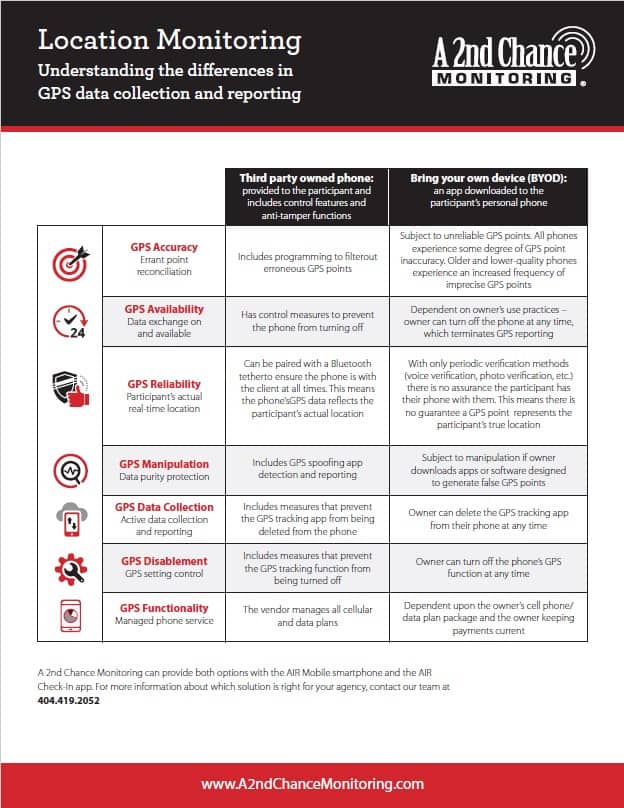
Location monitoring tracks where you are. This is GPS tracking, and the devices include the Omnilink OM500 and the SCRAM GPS ankle units.
Alcohol monitoring confirms sobriety. The SCRAM CAM bracelet reads alcohol through the skin continuously, while Soberlink is a handheld remote breath device used on a set testing schedule. Courts order these in cases where staying alcohol-free is a condition.
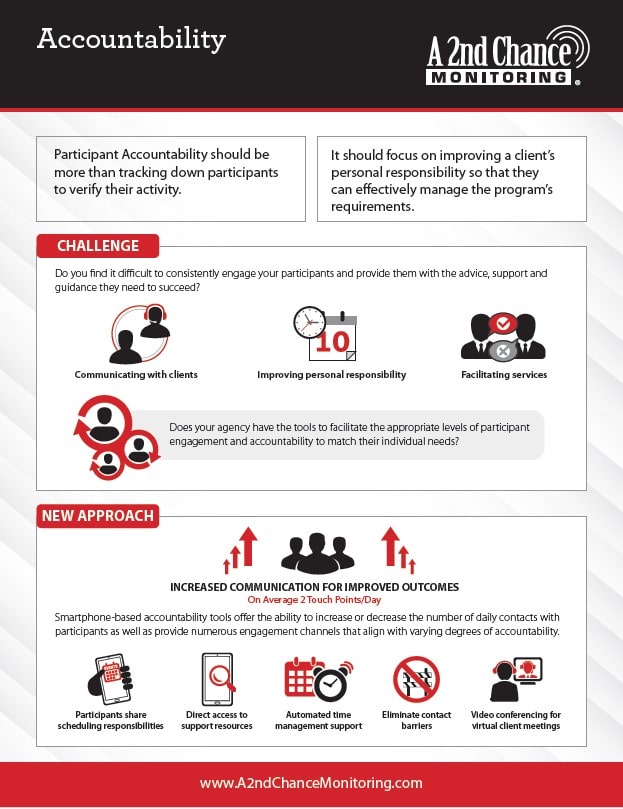
Communication and check-ins keep everyone connected. The Reconnect app handles messaging, reminders, check-ins, and digital forms with your supervising officer right from a phone.
Who Orders Electronic Monitoring, and Why
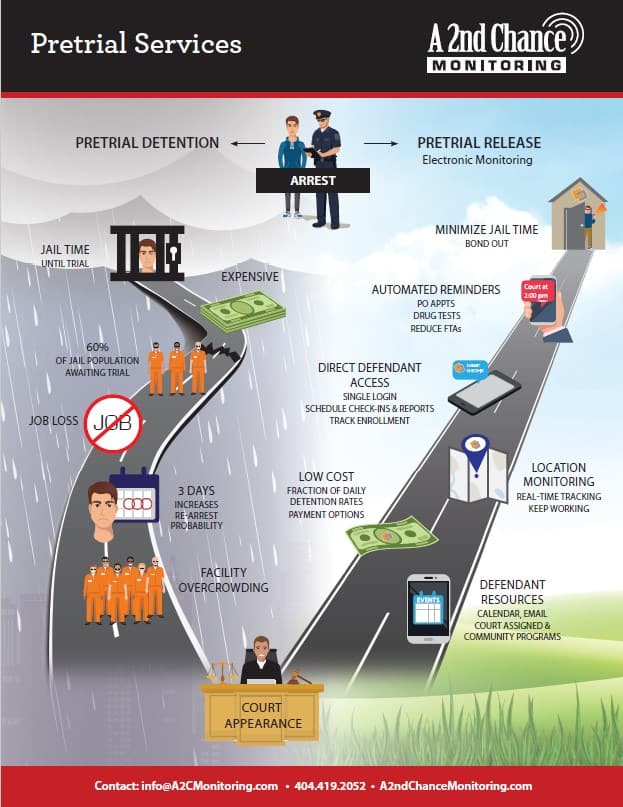
Courts order electronic monitoring in a range of situations. A person may be required to wear a GPS device as a condition of pretrial release, meaning they have not been convicted of anything and the device lets them stay in the community while their case is pending. Monitoring may also be ordered in connection with other court requirements or through accountability and specialty court programs. Some people choose monitoring voluntarily for structure and accountability.
The reason is simple. Monitoring keeps people working, connected to family, and accountable, instead of sitting in a jail cell while a case moves forward. The court overseeing your case decides whether it is required and which device fits.
How Is A 2nd Chance Monitoring Different From a Bail Bond Company?
A bail bond company helps get someone out of jail. A monitoring company provides the device and the 24/7 supervision that may be part of that release or ordered on its own. They are different services.
A 2nd Chance Monitoring is a monitoring services provider. The team fits devices, runs 24/7 monitoring, produces reports, and can speak to compliance for courts and attorneys across Georgia, Alabama, and Mississippi. It works directly with courts, supervising officers, and accountability programs.
It is also the sister company to A 2nd Chance Bail Bonds. The two coordinate closely, bail to help someone get released and monitoring to keep them accountable, but they remain separate services with separate roles.
What to Expect With A 2nd Chance Monitoring
When you enroll, a staff member fits the device, walks you through how it works, explains your specific conditions, and answers your questions. From there, the routine is steady: charge the device on schedule, follow your approved plan, and tell your supervising officer about any changes before they happen.
Support is available 24/7, so there is always someone to call when something unexpected comes up. For more on the day-to-day, see our guides on keeping your job on electronic monitoring and the six steps to meet court-ordered monitoring requirements. You can also check our frequently asked questions.
So, how does electronic monitoring work? A device records, a center reviews, and your supervising officer and the court set the rules. Once you understand that, the rest comes down to the details of your court order and staying in touch with your supervising officer. A 2nd Chance Monitoring provides GPS tracking, alcohol monitoring, and communication services across Georgia, Alabama, and Mississippi, with real people on the line 24/7.
Frequently Asked Questions
How does electronic monitoring work?
What is the difference between location and alcohol monitoring?
Is electronic monitoring only for people who have been convicted?
Does A 2nd Chance Monitoring provide bail bonds?
What areas does A 2nd Chance Monitoring serve?
About A 2nd Chance Monitoring
We believe everyone deserves a second chance. A 2nd Chance Monitoring provides alcohol monitoring, GPS tracking, and communication services to help individuals stay accountable while they navigate legal requirements or work toward personal goals. With multiple locations across Georgia, Alabama, and Mississippi, our team offers professional support and reliable technology you can count on 24/7. Whether you’re fulfilling a court order or simply looking for structure during a difficult time, we’re here to help. Get in touch with us today.
The information in this article is provided for general educational purposes only and does not constitute legal advice. Monitoring requirements, devices, and conditions vary by county, court, and individual case, and are governed by your court order and the instructions of your supervising officer. If you have specific legal questions about your situation, please consult a licensed attorney in Georgia. A 2nd Chance Monitoring provides electronic monitoring services and does not provide legal representation or legal advice.