
Sometimes, but whether you can transfer electronic monitoring to another state depends almost entirely on why you are being monitored in the first place. Someone on supervision after a case has been resolved has a formal process available to them. Someone monitored while a case is still pending does not, and has to ask the court directly.
Those two paths look nothing alike, and confusing them is the reason people get bad information about this. Start by figuring out which one you are on.
First Question: Is Your Case Pending or Resolved?
Everything follows from this.
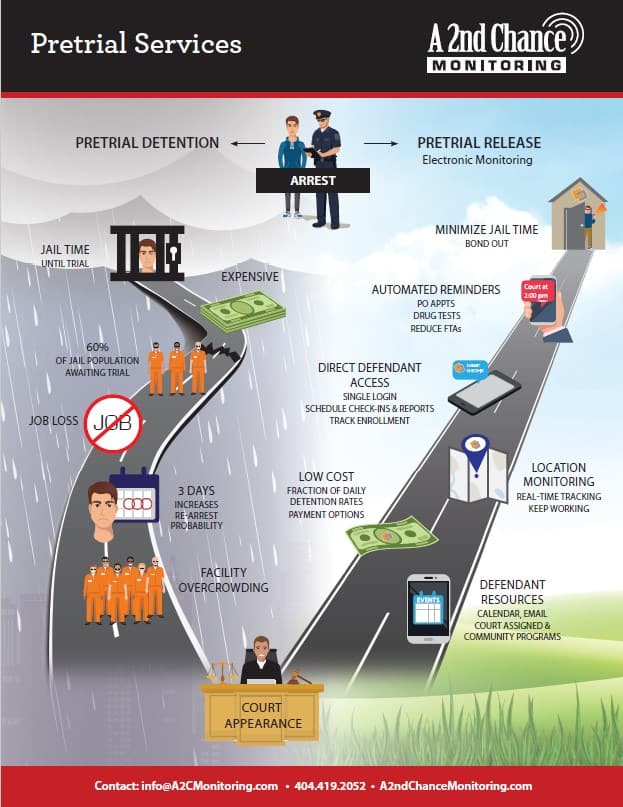
If your case is still open and monitoring is a condition of your release while it moves through the courts, you are in the pretrial category. Your permission to move comes from the court overseeing your case, and nowhere else.
If your case has been resolved and you are under supervision as a result, you may be eligible for a formal interstate transfer process that exists specifically for that situation.
Ask your attorney or your supervising officer which describes you. People are frequently wrong about their own status, particularly early on.
Transferring Supervision After a Case Is Resolved
There is a national agreement between states that handles this, called the Interstate Compact for Adult Offender Supervision. Every state participates.
It covers people under supervision following a felony, and people under supervision following certain qualifying misdemeanors. If you fall inside it, transferring supervision to another state is a defined process rather than a favor you have to talk someone into.
The receiving state generally has to accept a transfer when the person meets the eligibility criteria, which is the part most people do not realize. Those criteria typically include having more than 90 days of supervision remaining, a supervision plan approved by the sending state, substantial compliance with current conditions, and either employment or another means of support in the new state along with residency there or family willing to help.
What it is not is fast. The process involves two states, paperwork moving between agencies, and an investigation of the proposed address on the receiving end. Start it long before you plan to move, not the week the lease begins.
Why a Pending Case Cannot Use That Process
This is the detail that surprises people, and it is worth being direct about.
The interstate compact does not cover people supervised under a pretrial release program, bail, or similar arrangements. Those situations are specifically excluded. So if you are wearing a device while your case is pending, there is no compact application to file and no transfer to request through that system.
What you have instead is a direct request to the court overseeing your case, made through your attorney, asking to modify the conditions of your release so you can live somewhere else. Courts do grant these. They also deny them, and they are generally more cautious the more serious the pending charge is.
If a bond is involved, there is a second approval to get. A bonding company that wrote a bond has its own interest in where you live, and moving out of state without telling them creates problems independent of anything the court does. Our related guide on defendant responsibilities while out on bail in Georgia covers those obligations.
What a Court Wants to See Before Approving a Move
Vague plans get denied. Specific ones get considered.
- A confirmed address, not a city or an intention to find something
- Employment in the new state, or a documented means of support
- Who will supervise you there, and confirmation that agency will take you
- Who will service the monitoring equipment locally
- A plan for returning for court dates, including how and how often
- A reason the move is necessary rather than preferred
That fourth point is the one applicants forget, and it stalls more requests than anything else on the list.
Will the Device Even Work in Another State?
Technically, almost always. Practically, that is not the question that matters.
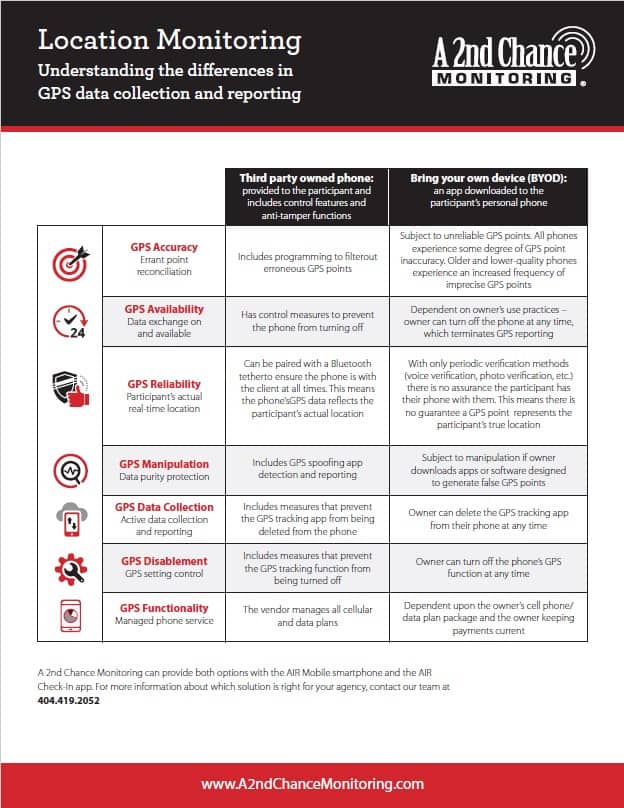
A GPS monitoring device works through satellite positioning and cellular networks that do not stop at a state line. The hardware does not care that you crossed into Alabama. That is precisely why people assume relocating is simple.
The constraint is service, not signal. Somebody has to install equipment, replace a strap when it fails, respond when a device malfunctions at 9 p.m., and maintain a working relationship with the supervising agency in that jurisdiction. A monitoring provider without a presence in your new state cannot do those things, no matter how well the device transmits.
So the real question is never “will it work there.” It is “who is going to take care of this there, and will the court accept them.”
Where A 2nd Chance Monitoring Can Follow You
A 2nd Chance Monitoring operates across Georgia, Alabama, and Mississippi.
The Mississippi coverage came through a partnership with GPS Nationwide Monitoring, announced in 2024, under which devices are installed locally in Mississippi while monitoring is handled by the A 2nd Chance team in Georgia. You can read the announcement of the Mississippi expansion for how that arrangement works.
For a move within those three states, continuity of monitoring is a much shorter conversation than it would otherwise be, because the provider does not have to change. Moving beyond them means a different provider picks up the equipment side, which is an additional approval and an additional handoff for the court to be satisfied with.
Even then, you are not starting from zero. Through our relationships with monitoring manufacturers and industry partners, we can often help you locate and coordinate with a provider in the state you are moving to, so the court has a concrete answer to the question of who will service the equipment there. If a move outside Georgia, Alabama, or Mississippi is on the table, ask us early, and we will help you find that connection before you file the request.
What Happens If You Move Without Permission
The device tells on you, and it does so immediately.
Location data is the entire point of GPS monitoring. Leaving an approved area generates an alert, and a sustained absence from a required location generates several. There is no version of this where a relocation goes unnoticed, and attempting it converts a request that might have been granted into a violation that will not be.
Consequences are decided by the court, not by the monitoring provider, and can include modified conditions, a warrant, or a return to custody. Our post on what happens if you violate electronic monitoring in Georgia covers how those situations are handled.
Moving Within Georgia Is a Different Conversation
Relocating inside the state is far simpler, though it is not automatic.
A new address usually needs approval because your home is typically a required location programmed into the system, so it has to be updated before you sleep somewhere new. Give notice in advance, provide the full address, and confirm the change was made rather than assuming. Our post on how far you can go with an ankle monitor covers day-to-day range and travel, which is a separate question from where you live.
Frequently Asked Questions
Can you transfer electronic monitoring to another state?
Does the Interstate Compact cover pretrial defendants?
Does a GPS ankle monitor still work in another state?
How long does an interstate supervision transfer take?
What happens if you move out of state without approval?
Starting the Conversation Early
Whether you can transfer electronic monitoring to another state comes down to your status, your paperwork, and who will service the equipment once you get there. None of those is something you can resolve the week before a move. Talk to your attorney and your supervising officer as soon as relocating becomes a real possibility, get a specific address and a specific job on paper, and find out who covers monitoring in the state you are heading to. Requests supported by that kind of detail get approved far more often than requests built on good intentions.
About A 2nd Chance Monitoring
We believe everyone deserves a second chance. A 2nd Chance Monitoring provides alcohol monitoring, GPS tracking, and communication services to help individuals stay accountable while they navigate legal requirements or work toward personal goals. With multiple locations across Georgia, Alabama, and Mississippi, our team offers professional support and reliable technology you can count on 24/7. Whether you’re fulfilling a court order or simply looking for structure during a difficult time, we’re here to help. Get in touch with us today.
The information in this article is provided for general educational purposes only and does not constitute legal advice. Interstate transfer eligibility, court approval for relocation, and monitoring requirements vary significantly by state, county, court, and individual case. If you are considering a move while under any form of court-ordered monitoring, please consult a licensed attorney before taking any action. A 2nd Chance Monitoring provides electronic monitoring services and does not provide legal representation or legal advice.