
You can find a job in Georgia even with a criminal record or an open court case. Steady work is one of the clearest ways to show the court overseeing your case, and your supervising officer, that you are taking responsibility while your case is pending or while you are under supervision. This guide covers how to find a job with a criminal record or an open case in Georgia, where to look, and how electronic monitoring can help protect the job you land.
Looking for work with a record or a pending charge is not easy. It is also very possible. People do it across Georgia every day.
How to Find a Job With a Criminal Record: Start With Fair-Chance Employers
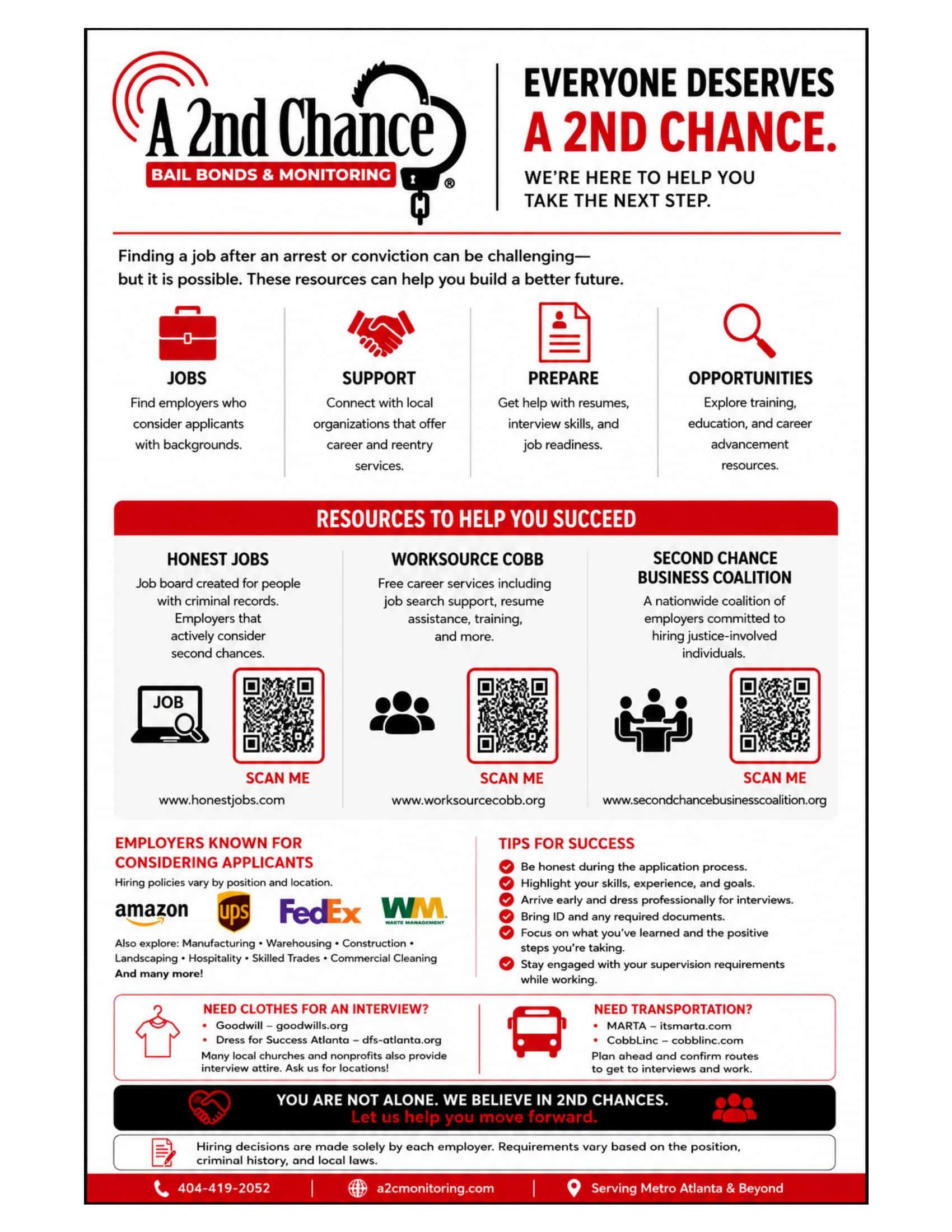
Fair-chance employers look at your skills first, not your record. Honest Jobs is a well-known fair-chance job board that connects justice-involved job seekers with employers who are open to second chances. You can filter by location, schedule, and job type, including remote, hybrid, part-time, and full-time roles.
A 2nd Chance Monitoring points clients toward Honest Jobs often, and it is a strong place to start. It is not the only option, though. Once you have looked there, branch out to other platforms and local resources until you find roles that fit your skills and goals.
Georgia Employers Known for Considering Applicants
Some large employers with Georgia operations are known for considering applicants with records. Hiring policies vary by role and location, so a background does not automatically rule you out. Names that come up often include Amazon, UPS, FedEx, and Waste Management.
Certain industries tend to be more open in many cases. Warehousing, manufacturing, construction, hospitality, landscaping, skilled trades, and commercial cleaning are worth a close look. Each employer makes its own call, so apply widely and let your work history speak.
Georgia Reentry Resources That Can Help
Knowing how to find a job with a criminal record is partly about knowing where to look. These Georgia resources can point you toward fair-chance work and the support around it.
- WorkSource Cobb offers free career services, including job search help, resume support, and training.
- The Second Chance Business Coalition is a national group of employers committed to second-chance hiring.
- Local nonprofits and reentry programs often have direct relationships with fair-chance employers.
- Staffing agencies can offer short-term work that sometimes turns into a permanent role.
- Gig work can bring in flexible income while your case moves forward.
Practical help matters too. Need clothes for an interview? Goodwill and Dress for Success Atlanta can help. Need a way to get there? MARTA and CobbLinc can get you to interviews and work, so plan your route ahead of time.
Ban the Box: What It Means for Your Application in Georgia
In Georgia, many state government job applications no longer ask about criminal history up front. This policy is often called “ban the box,” and it delays the criminal-history question until later in the hiring process so you can be judged on your skills first.
Ban the box in Georgia applies to state (public sector) jobs. Private employers set their own policies. Many still ask about history, but a growing number choose to consider applicants with records.
If you have an open case and have not been convicted, remember that an arrest or a pending charge is not a conviction. Some Georgia records may also be eligible for restriction and sealing, sometimes called expungement, under Georgia law. A licensed attorney or a group like the Georgia Justice Project can tell you whether you qualify.
Be Honest, but Keep It Simple
Employers value honesty, but you do not need to overshare. If the court does not legally require you to disclose case details, you do not have to volunteer them. Put the focus on your strengths and what you bring to the job.
If an employer asks about your history, keep your answer short. Own your past, explain what you learned, and steer the conversation back to the role. If your case is still open, you can say plainly that a pending charge is not a conviction.
How Electronic Monitoring Can Protect Your Job
Electronic monitoring is built to let you keep working, not to stop you. In many cases, the court overseeing your case can approve the schedules and travel you need to get to and from your job.
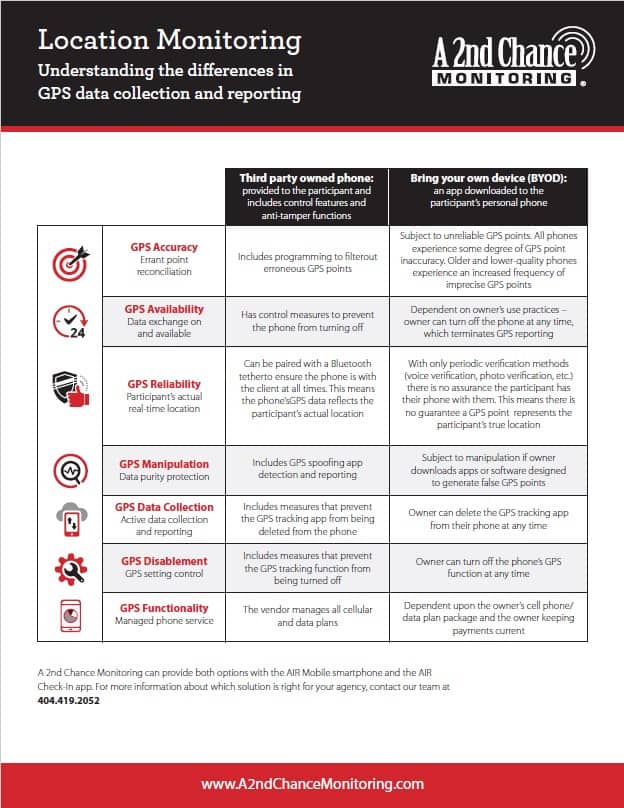
Location monitoring devices like the Omnilink OM500, or a less-noticeable wrist-worn option like the BI VeriWatch, can be set up with approved schedules and zones that fit a work routine. The Reconnect app handles check-ins, reminders, and messages with your supervising officer right from your phone, so a check-in does not have to pull you off a shift.
A 2nd Chance Monitoring works with the court and your supervising officer to support approved work travel and scheduling. If your job needs flexibility, tell your supervising officer early. For more on staying compliant while you work, see our six steps for meeting monitoring requirements and our guide to keeping your job and supporting your family on electronic monitoring.
If you are still working to get released so you can start your job search, our sister company A 2nd Chance Bail Bonds can help with that step.
Figuring out how to find a job with a criminal record, or while your case is still open, takes patience. People do it every day in Georgia. Use fair-chance resources, stay honest and steady, and lean on support that is built to keep you working, including monitoring designed around your job.
Frequently Asked Questions
Can I get a job in Georgia with an open criminal case?
Do I have to tell an employer about my record or pending charge?
What is “ban the box” in Georgia?
Which employers in Georgia hire people with records?
Will wearing an ankle monitor stop me from working?
About A 2nd Chance Monitoring
We believe everyone deserves a second chance. A 2nd Chance Monitoring provides alcohol monitoring, GPS tracking, and communication services to help individuals stay accountable while they navigate legal requirements or work toward personal goals. With multiple locations across Georgia, Alabama, and Mississippi, our team offers professional support and reliable technology you can count on 24/7. Whether you’re fulfilling a court order or simply looking for structure during a difficult time, we’re here to help. Get in touch with us today.
The information in this article is provided for general educational purposes only and does not constitute legal advice. Employment rules, background check practices, and monitoring requirements vary by county, court, employer, and individual case. If you have specific legal questions about your situation, please consult a licensed attorney in Georgia. A 2nd Chance Monitoring provides electronic monitoring services and does not provide legal representation or legal advice.