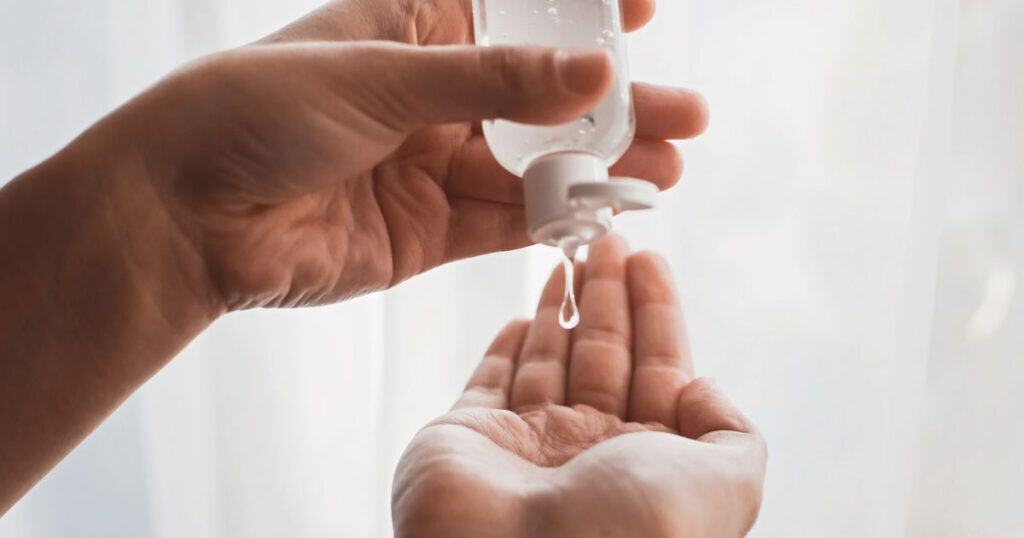
Hand sanitizer can produce a reading on a SCRAM CAM. That part is true, and anyone who tells you otherwise is oversimplifying. What is also true is that a reading is not the same thing as a confirmed drinking event, and the system is specifically designed to tell those two things apart.
The difference comes down to shape. Alcohol you drink and alcohol that lands on your skin behave in completely different ways, and the bracelet is reading that behavior every half hour.
Can Hand Sanitizer Actually Set Off a SCRAM CAM?
It can register. Whether it becomes a problem is a separate question.
A SCRAM CAM samples insensible perspiration at the skin surface and pulls it across a fuel cell, the same detection technology used in breath testing equipment. It does this automatically every 30 minutes. If a large amount of alcohol-based sanitizer is applied right at the device, vapor can reach that sample area and the fuel cell will detect it, because the fuel cell’s job is to detect alcohol without caring how it arrived.
Our guide to how the SCRAM CAM bracelet works covers the fundamentals, and our comparison with remote breath testing explains when each device is used.
What happens next is where people get the wrong impression. That detection enters an analysis process rather than going straight to a court as a violation.
How a SCRAM CAM Tells Drinking From Environmental Alcohol
Through the curve, which is the single most useful thing to understand about this device.
When a person drinks, alcohol enters the bloodstream gradually and leaves gradually. The body absorbs it over a period of time and then metabolizes it at a fairly predictable rate. Plotted over hours, that produces a recognizable rise and fall.
Environmental alcohol does not behave that way at all. According to SCRAM Systems, an external source creates a rapid spike faster than the body could ever absorb alcohol, and it then evaporates and burns off far faster than the body could ever metabolize it. The result is a sharp narrow shape rather than a slow curve.
Confirmation is not automated guesswork either. The manufacturer describes a process combining mathematical algorithms with human analysis before a result is confirmed as a drinking event. Trained analysts look at the data pattern, not a single number.
What a SCRAM CAM False Positive Actually Means
Three different things get called a false positive, and separating them clears up most of the anxiety.
A reading is the raw detection of alcohol at the sensor. Readings happen, including from environmental sources, and a reading on its own is not an accusation.
An alert is what the monitoring system generates when data meets certain conditions and warrants a closer look. An alert triggers review.
A confirmed event is what gets reported to the court after analysis supports the conclusion that alcohol was consumed. That is the one that carries consequences.
When someone says a SCRAM CAM false positive happened, they usually mean the first or second thing. The system exists precisely so those do not automatically become the third.
Everyday Products That Can Cause a Reading
Anything with a meaningful concentration of alcohol that ends up near the device is worth being deliberate about.
- Hand sanitizer, particularly when applied heavily or near the ankle
- Hairspray, body spray, perfume, and cologne
- Lotions, aftershave, and some deodorants
- Mouthwash containing alcohol
- Household cleaning products, especially in a small enclosed space
- Gasoline, paint thinner, nail polish remover, and similar solvents
- Some over the counter medications, including certain cough and cold liquids
There is a second category that gets lumped in with these but genuinely should not be. Kombucha, non-alcoholic beer, some vinegars, and vanilla extract contain real alcohol that is actually consumed. Those are not environmental exposure. They are ingested alcohol in small amounts, they follow a metabolic curve, and they are a legitimate risk for anyone under an abstinence requirement. If you are being monitored, treat the ingredient label as part of the condition.
The Two Sensors Working Alongside the Fuel Cell
The alcohol sensor is not doing this alone, which is why covering the device is such a poor idea.
An infrared sensor measures the reflective quality of the skin to confirm the bracelet is against the body and that nothing has been placed between the device and the skin. A temperature sensor tracks both the wearer’s temperature and the ambient temperature to detect removal or attempts to interfere.
Those two sensors are why the common advice to “just put something under it” backfires so reliably. An obstruction reads as an obstruction. What was going to be a routine environmental reading turns into a tamper question instead, and a tamper question is a much harder conversation. Our post on what counts as tampering covers where that line sits.
How to Avoid Environmental Readings in the First Place
Prevention is straightforward and takes about a week to become habit.
Switch to alcohol-free hand sanitizer and alcohol-free mouthwash. Apply lotions, sprays, and cosmetics away from the device and let them dry fully before the area is covered. Use cleaning products in ventilated spaces rather than a closed bathroom. If your work involves solvents, fuel, or industrial cleaners, tell your supervising officer that up front rather than after a reading appears, because context supplied in advance is far more useful than context supplied in response to an alert.
Keep the skin under the bracelet clean and dry, and never place fabric, tissue, or padding between the device and your skin.
What to Do If You Think a Reading Is Wrong
Say something immediately, and be specific.
Write down what you were exposed to, when, where, and for how long, on the same day it happened. Contact your supervising officer and your attorney rather than waiting for someone to contact you. A wearer who reports a solvent exposure at 4 p.m. on Tuesday is in a fundamentally different position than one who offers the same explanation three weeks later after receiving a violation notice.
Do not remove the device. Do not attempt to clean the sensor. Do not cover it. Every one of those creates a second problem on top of the first.
Does a Reading Automatically Mean a Violation?
No. A reading is data, and data goes through review before anything is reported to a court.
The monitoring provider reports to the supervising officer and the court overseeing the case. What happens after that is a decision for the court, not for the monitoring company, and it depends on the case, the conditions of release, and the full record. Our post on what happens if you violate electronic monitoring in Georgia covers how that process unfolds.
Worth being straight about the limits, too. No monitoring technology is perfect, and if you believe a confirmed result is wrong, that is a matter to raise with your attorney, who can request the underlying data and challenge it through the court.
Frequently Asked Questions
Can hand sanitizer cause a SCRAM CAM false positive?
How does a SCRAM CAM know the difference between drinking and hand sanitizer?
Can lotion or perfume set off an alcohol monitor?
Does kombucha or non-alcoholic beer show up on a SCRAM CAM?
What should you do if you are exposed to alcohol products by accident?
Living With the Device Without Living in Fear of It
The worry about a SCRAM CAM false positive is understandable, and it is also mostly manageable. Switch a few products, apply the rest away from the bracelet, be honest early when something happens, and leave the device alone. The technology is built around the fact that environmental alcohol and consumed alcohol look nothing alike over time, and the review process exists so that a bottle of sanitizer does not become a court problem. Understanding how it works is the fastest way to stop being anxious about it.
About A 2nd Chance Monitoring
We believe everyone deserves a second chance. A 2nd Chance Monitoring provides alcohol monitoring, GPS tracking, and communication services to help individuals stay accountable while they navigate legal requirements or work toward personal goals. With multiple locations across Georgia, Alabama, and Mississippi, our team offers professional support and reliable technology you can count on 24/7. Whether you’re fulfilling a court order or simply looking for structure during a difficult time, we’re here to help. Get in touch with us today.
The information in this article is provided for general educational purposes only and does not constitute legal advice. Monitoring requirements, reporting procedures, and the handling of alerts vary significantly by county, court, and individual case. If you have specific legal questions about your situation, or believe a monitoring result is inaccurate, please consult a licensed attorney in Georgia. A 2nd Chance Monitoring provides electronic monitoring services and does not provide legal representation or legal advice.