
If you have learned that an employee wears an ankle monitor, the most useful thing to understand first is how little that device tells you. It does not tell you what someone is accused of. It does not tell you whether a case has been decided. In many situations it tells you a court specifically wanted that person to keep working.
The second useful thing: your obligations as the employer are almost always smaller than people assume. You are not being asked to supervise anyone.
What an Employee Ankle Monitor Actually Tells You
Very little on its own, and assuming otherwise is where employers get into trouble.
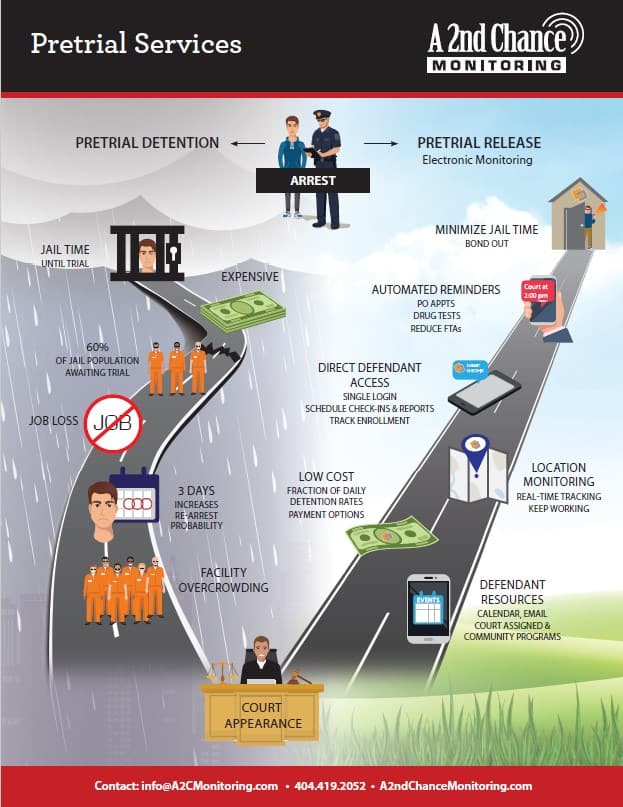
People wear monitoring devices at several different stages. Some are being monitored while a case is still pending and nothing has been decided. Some are under supervision after a case has been resolved. Some are participating in a court program, and some wear a device voluntarily as part of a structured plan they chose.
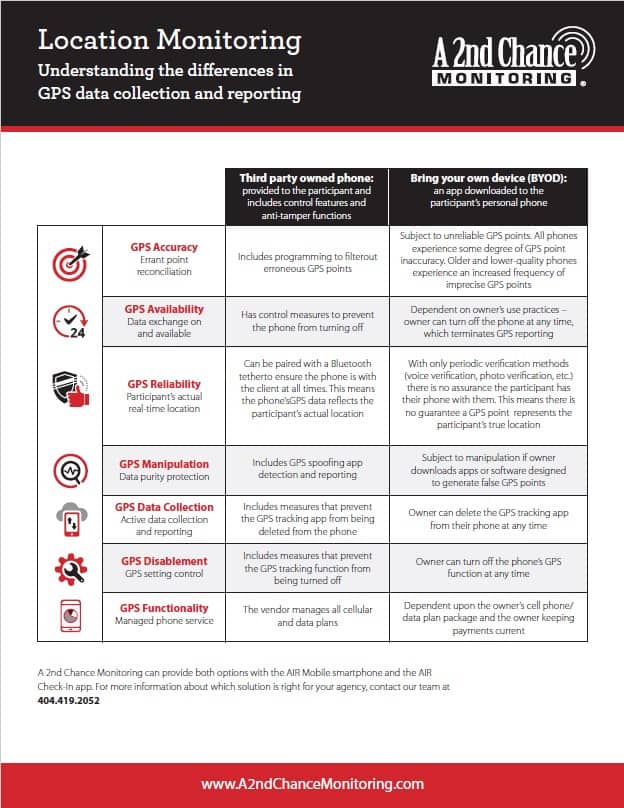
The device itself carries no information about any of that. It is a location or alcohol sensor with a court order behind it, and the order is not visible on the hardware. Our overview of what electronic monitoring is and how it works in Georgia covers the range of situations it gets used in.
Do You Have Legal Obligations as the Employer?
Generally you are not given a role in the supervision itself. What you do have is the same employment law framework that governs every other personnel decision, and that is the part worth being careful about.
Federal guidance has long drawn a distinction between arrest records and conviction records in employment decisions, on the reasoning that an arrest is not a finding that someone did anything. An employee monitored while a case is pending sits squarely inside that distinction. Employers who take adverse action based on an unresolved case are in a different legal position than employers responding to a resolved one.
This is genuinely a question for your employment counsel, not for a monitoring company and not for an article. What we can tell you is that the device does not distinguish between those situations, so you cannot use it as your basis for concluding anything.
What You May Be Asked to Provide
The requests that reach employers are usually administrative and small.
- A letter confirming employment, position, and hours
- Confirmation of the employee’s regular schedule, so it can be built into an approved movement plan
- Notice when that schedule changes in a lasting way
- Occasionally, confirmation that a specific shift occurred
Employment verification is the most common by far, and it is often the difference between a person keeping a job and losing one, because approved schedules are built around documented work hours.
What You Will Not Be Asked to Do
Worth stating plainly, because this is where employer anxiety usually sits.
You will not be asked to supervise the employee, to track them, to report on their movements, or to enforce any condition of their release. You are not a party to the court order. Compliance is between the individual, their supervising officer, and the court overseeing the case.
If anyone contacts you asking you to take on a monitoring role, that request should go to your own counsel before you agree to anything.
Can You See Where the Employee Is?
No. Employers do not receive location data.
Monitoring information goes to authorized parties connected to the case, typically the supervising officer, a case manager, and the court. An employer is not on that list and does not get a portal, a feed, or an alert.
That cuts both ways, and employers should understand the second half. Because you receive nothing, you also cannot verify anything through the device. If you need to know whether someone was at work, use your own timekeeping records the way you would for any employee.
The Scheduling Realities That Actually Matter
This is where monitoring touches your operation, and it is mostly about notice.
Most monitored employees operate on an approved schedule that specifies when they may be away from home and where they are permitted to be. Changes to that schedule generally require advance approval, not a same-day text.
Which means the friction points are predictable. Mandatory overtime announced at 4 p.m. is a problem. A shift that runs long because a truck arrived late is a problem. Being asked to cover a different location on short notice is a problem. None of these is unsolvable, but all of them need lead time, and an employee who says “I need to check” is not being difficult.
Court dates are the other recurring item. They are scheduled by the court, they move without warning, and the employee has no ability to decline. Treating those like any other required absence saves everyone a lot of friction. Our post on working while wearing an ankle monitor covers the employee side of these same approvals.
The Charging Question That May Come Up
Some devices need to be charged daily, often for a stretch of time while the person stays near an outlet.
For an employee working long shifts, that window sometimes has to happen at work. An employer being asked whether someone can charge a device during a break is being asked for an outlet and a place to sit, not for an accommodation with any real cost. Saying yes to it prevents a compliance problem that would otherwise land on the employee at the end of a double shift.
Safety, Liability, and Customer-Facing Roles
Employers do ask about this, and it deserves a straight answer rather than a reassuring one.
The honest position is that the monitor is not the relevant input. What matters is the same thing that always matters: the actual requirements of the role, and whatever information you legitimately have and are permitted to consider. A device on someone’s ankle tells you nothing about their suitability for a particular job, because it tells you nothing about the underlying case.
Where a genuine job-related concern exists, employment counsel can help you conduct the kind of individualized assessment that stands up later. Deciding based on the visible presence of a device is the approach most likely to create the problem you were trying to avoid.
Programs That Reduce Employer Cost and Risk
Two federal programs exist specifically to make second chance hiring easier, and most employers have never heard of either.
The Federal Bonding Program provides fidelity bonds covering employee theft, forgery, larceny, and embezzlement during an initial period of employment, at no cost to the employer or the employee. Coverage is available through state bonding coordinators.
The Work Opportunity Tax Credit offers a federal tax credit for hiring individuals in certain targeted groups, including people hired within a year of a felony conviction or release. The deadline is the part employers miss: the certification request generally has to be filed within 28 days of the employee’s start date, which means this has to be handled at hiring rather than at tax time.
One important limit. The tax credit’s eligibility turns on a conviction, so an employee being monitored while a case is still pending would not qualify on that basis. The bonding program has broader eligibility. The U.S. Chamber of Commerce guide to second chance hiring covers current requirements and amounts for both, which change periodically and should be confirmed before you rely on them.
How to Handle It With the Rest of Your Team
Quietly, in almost every case.
An employee’s legal situation is not company news, and an employer who discusses it with other staff creates exposure that did not previously exist. If a device becomes visible because of a uniform or a dress code, a small practical adjustment usually solves it without any conversation about why.
If a coworker raises it with you, the useful response is that personnel matters are confidential, and to leave it there.
Frequently Asked Questions
Does an employee ankle monitor mean the employee was convicted of something?
Can an employer see an employee’s ankle monitor location data?
What is an employer usually asked to do when an employee is on monitoring?
Can an employer fire someone for wearing an ankle monitor?
Are there financial programs for employers who hire people with records?
The Practical Takeaway
An employee ankle monitor asks less of an employer than most people expect. Verify employment when asked, give advance notice on schedule changes, be reasonable about a charging window and a court date, keep it confidential, and make personnel decisions on the same basis you always would. The employees who succeed on monitoring are overwhelmingly the ones who kept working through it, and the employer who made that possible usually did not have to do much at all.
About A 2nd Chance Monitoring
We believe everyone deserves a second chance. A 2nd Chance Monitoring provides alcohol monitoring, GPS tracking, and communication services to help individuals stay accountable while they navigate legal requirements or work toward personal goals. With multiple locations across Georgia, Alabama, and Mississippi, our team offers professional support and reliable technology you can count on 24/7. Whether you’re fulfilling a court order or simply looking for structure during a difficult time, we’re here to help. Get in touch with us today.
The information in this article is provided for general educational purposes only and does not constitute legal advice, and nothing here should be treated as employment law guidance. Employment obligations, hiring and termination decisions, tax credit eligibility, and monitoring requirements vary by jurisdiction and by individual circumstance. Employers should consult qualified employment counsel before making personnel decisions involving an employee with a pending or resolved legal matter. A 2nd Chance Monitoring provides electronic monitoring services and does not provide legal representation or legal advice.