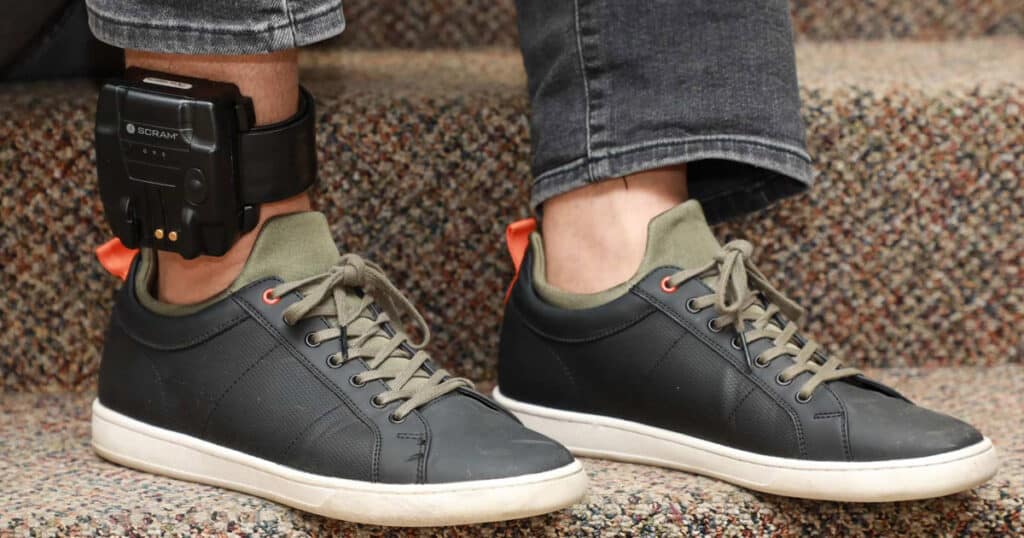
People often wonder what it’s like to wear an ankle monitor. Instead of describing it secondhand, we are keeping one client’s own account, first shared in 2023, exactly as they told it. Their words are below, unedited. After the story, we added a short editorial update on how the technology works today and answers to the first-day questions people ask most.
What It’s Like to Wear an Ankle Monitor, in Their Words
A first-person account from a defendant under house arrest. The account below is preserved as originally published; the words are the client’s own.
Nobody prepares you for this. When you are charged with a crime, you have to make decisions quickly and you don’t know which way to go. All of a sudden, I had to find an attorney and contact a bail bonds agency. How was I going to do all that? I was in jail!
I relied on my family to help me. They found A 2nd Chance Bail Bonds through a friend of a friend. I had already been in county jail for seven weeks when that connection was made. The court decided I could be on probation if I wore an ankle monitor 24/7. Luckily, A 2nd Chance’s sister company, A 2nd Chance Monitoring, offers electronic monitors so that was one less call I had to make.
A monitoring professional from A 2nd Chance Monitoring came to the jail and fitted me with an electronic ankle monitor so I could be released. He was so gracious and kind. I will never forget his gentle demeanor after seven weeks in the county jail. Because I was learning how to live in a new world with an ankle monitor, I had several questions that he answered for me:
- Could I shower with the monitor on?
- How do I know it’s time to charge it?
- How long do I have to sit next to an electrical outlet to fully charge it?
- Where is the warning light that tells me the monitor is low on power?
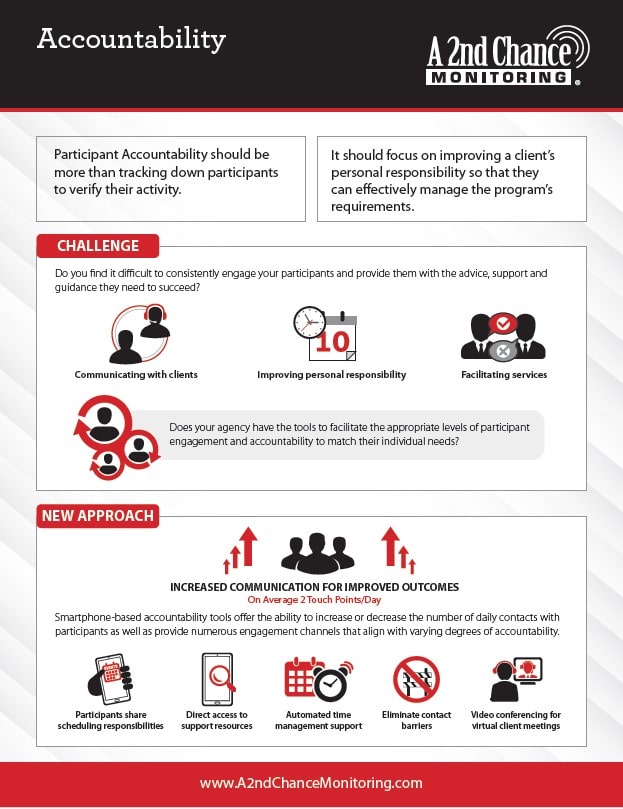
For the past two years and seven months, I have been on the strictest kind of house arrest. At first, I was only allowed to drive to work and drive home. I was so worried about doing something wrong that I texted my A 2nd Chance Monitoring agent before I left for work, when I arrived, when I left for the day and when I got home. I was never once told to stop texting even though I’m sure it was annoying. It was the overcommunication that I needed for peace of mind and my contact understood that.
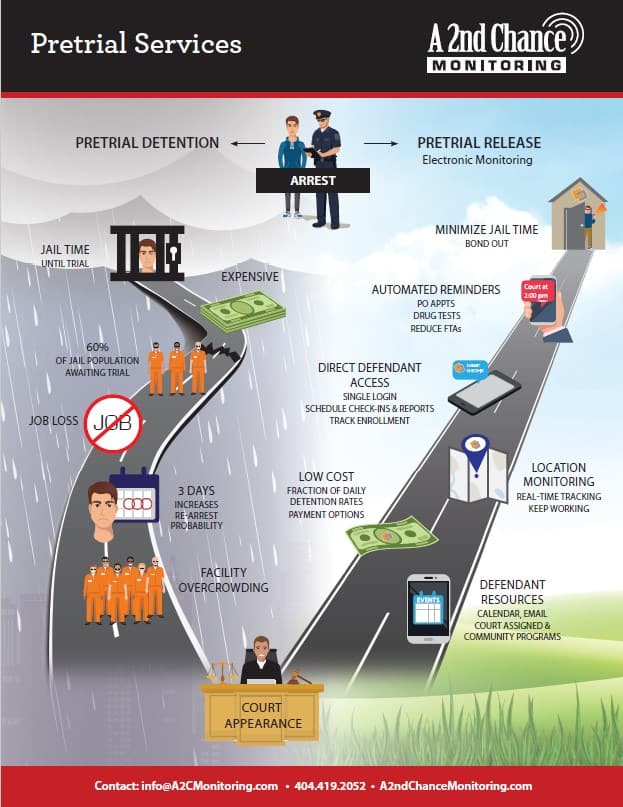
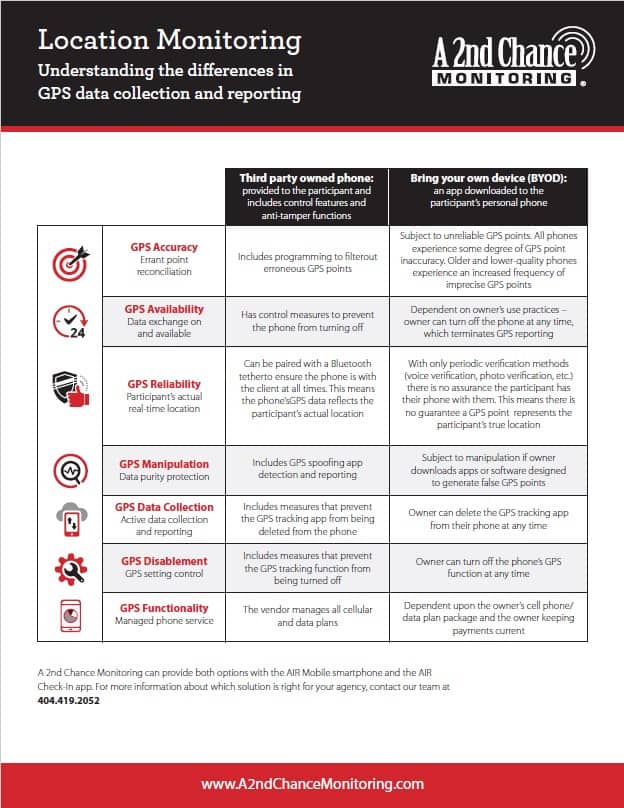
After six months with A 2nd Chance Monitoring they moved me to a different monitor that didn’t need to be charged at a wall outlet in order to communicate with my contact. It came with a phone that I carried with me 24/7. As long as the monitor and the charged phone were together, I was in compliance with the terms of my house arrest. Another nice feature with the phone is that I could use its calendar and my schedule would be visible to A 2nd Chance Monitoring.
My contact from A 2nd Chance Monitoring was a great compass for me as I navigated this world of unknowns. A 2nd Chance Monitoring has shown an incredible capacity to manage me, answer all my questions and set my expectations. Most importantly, all the A 2nd Chance Monitoring people always treated me like a human being and not a violator.
I would recommend A 2nd Chance Monitoring a hundred times over. They have gone above and beyond for me.
What the Technology Looks Like Today
Editorial update from A 2nd Chance Monitoring. This section is not part of the account above.
That account is one person’s experience. What it’s like to wear an ankle monitor day to day depends on the device and on the conditions the court overseeing your case sets, and it applies to people who are pretrial, post-conviction, or meeting other court requirements. Here is how the practical pieces the writer raised generally work now.
Showering is usually fine. GPS ankle units like the Omnilink OM500 are water-resistant for everyday wear, including showering. Extended submersion, such as a bath or swimming, generally needs specific approval. On charging, most units charge about once a day for an hour or two, and the device warns you before the battery runs low. Your monitoring team will show you exactly where that low-battery indicator is on your unit.
The phone-based setup the writer describes has grown into the Reconnect app, which handles check-ins, reminders, messaging, and a shared schedule with your supervising officer from a smartphone. For anyone worried about a visible ankle unit, a wrist-worn option like the BI VeriWatch looks like a smartwatch and draws less attention. The writer’s instinct to overcommunicate is a good one. When in doubt, reach out. A 2nd Chance Monitoring offers 24/7 support, the same way the writer describes.
The writer found their way to monitoring through our sister company, A 2nd Chance Bail Bonds. For more on why a device might alert and what to do, see our guide to understanding electronic monitoring alerts, and for the big-picture overview, what electronic monitoring is and how it works.
Frequently Asked Questions
Can you shower with an ankle monitor on?
How often do you charge an ankle monitor?
Does an ankle monitor track everywhere you go?
Is there a less noticeable option than an ankle monitor?
What should you do on your first day with an ankle monitor?
If you have been ordered to wear a monitor and you are anxious about what it’s like to wear an ankle monitor, this account is a reminder that people get through it, often while working and living at home. The technology has only gotten easier since. A 2nd Chance Monitoring is here to answer your questions the same way, 24/7, and to treat you like a person, not a number.
About A 2nd Chance Monitoring
We believe everyone deserves a second chance. A 2nd Chance Monitoring provides alcohol monitoring, GPS tracking, and communication services to help individuals stay accountable while they navigate legal requirements or work toward personal goals. With multiple locations across Georgia, Alabama, and Mississippi, our team offers professional support and reliable technology you can count on 24/7. Whether you’re fulfilling a court order or simply looking for structure during a difficult time, we’re here to help. Get in touch with us today.
The information in this article is provided for general educational purposes only and does not constitute legal advice. The personal account reflects one individual’s experience; monitoring requirements, devices, and conditions vary by county, court, and individual case, and are governed by your court order and the instructions of your supervising officer. If you have specific legal questions about your situation, please consult a licensed attorney in Georgia. A 2nd Chance Monitoring provides electronic monitoring services and does not provide legal representation or legal advice.