GPS ankle monitoring is one of the most common alternatives to jail in the United States. If you or someone you care about has been ordered to wear a GPS ankle monitor, you probably have questions. How does it work? What are the rules? How much does it cost? This guide breaks it all down in plain language so you know exactly what to expect.
The number of people on electronic monitoring in the U.S. has grown steadily over the past two decades. According to data from the Pew Charitable Trusts, the use of GPS tracking devices in the criminal justice system grew by 140 percent between 2005 and 2015. Every state, the District of Columbia, and the federal government now use some form of electronic monitoring. For many defendants, GPS ankle monitoring allows them to keep working, stay with their families, and meet their legal obligations without sitting in a jail cell.
What Is a GPS Ankle Monitor?
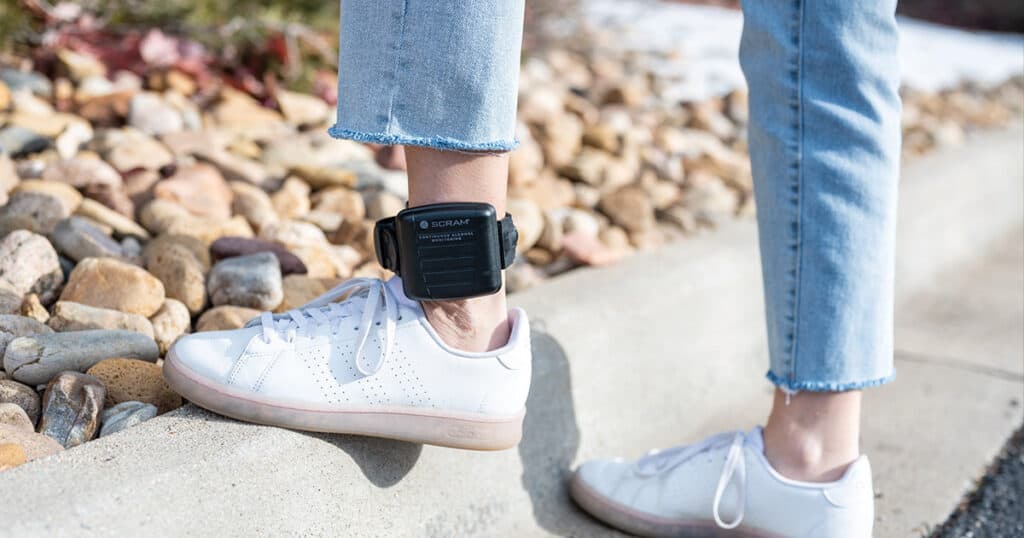
A GPS ankle monitor is a small electronic device worn around the ankle. It uses satellite technology to track the wearer’s location in real time. Courts order GPS ankle monitoring as a condition of pretrial release, probation, parole, or house arrest. The device stays on 24 hours a day and sends location data to a monitoring center where trained staff review it.
Think of it like a fitness tracker, except instead of counting steps, it records where you are throughout the day. That data goes to a supervising officer or monitoring team who confirms you are following your court-ordered conditions.
Modern GPS ankle monitors are waterproof, tamper-resistant, and much smaller than earlier models. Most weigh just a few ounces and can be worn under pants or socks without drawing much attention.
How GPS Ankle Monitoring Works
GPS ankle monitors rely on the same satellite network that powers navigation apps on your phone. The device receives signals from multiple GPS satellites orbiting Earth. By measuring the timing of those signals, it calculates your exact location through a process called trilateration.
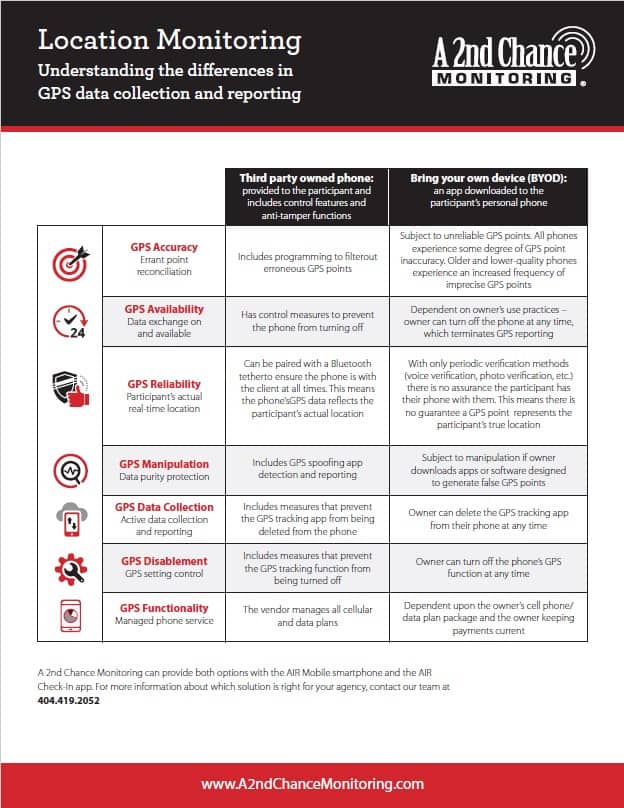
A GPS tracker is affixed to the ankle and worn 24 hours a day. The wearer’s location is detected by GPS satellites, cellular towers, and Wi-Fi. GPS trackers receive satellite signals but do not transmit back to satellites, and they do not require an unobstructed view of the sky to function.
Here is a simple breakdown of the technology layers:
- GPS satellites provide the primary location data. According to SCRAM Systems, modern devices generate 1,440 location points per day.
- Cellular networks transmit the location data from the ankle monitor to a monitoring center. The device connects to nearby cell towers, similar to how a smartphone works.
- Wi-Fi signals serve as a backup when GPS coverage is limited. This is especially useful inside buildings, apartment complexes, or areas with tall structures.
Supervising officers can program the device with specific rules. These rules typically include inclusion zones (places you are allowed to be, like your home or workplace) and exclusion zones (places you must avoid). If you enter or leave these areas outside your approved schedule, the system sends an alert.
Who Gets Ordered to Wear a GPS Ankle Monitor?
Courts may order GPS ankle monitoring for several types of cases. The decision is based on factors like the nature of the charge, the defendant’s history, and the perceived risk level. Common situations include:
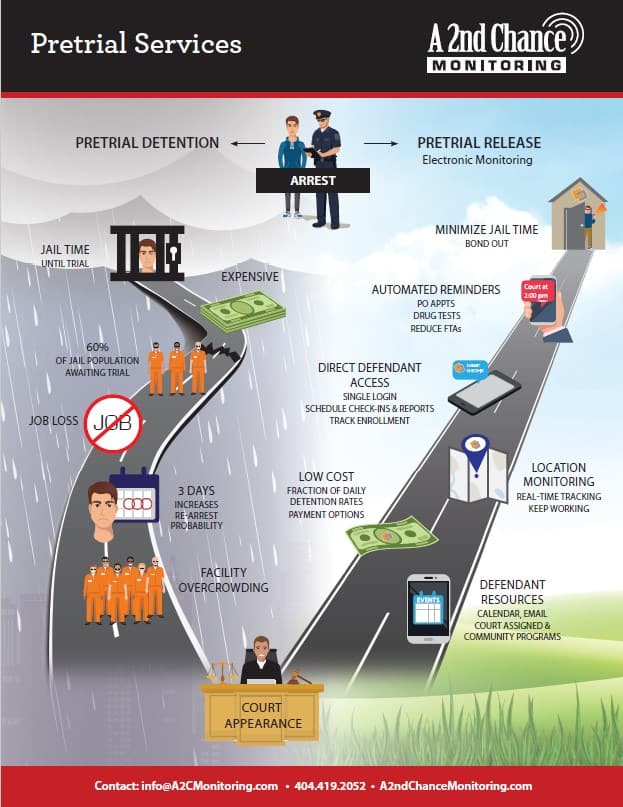
- Pretrial release: Defendants awaiting trial who need supervision but do not require jail detention.
- Probation: People serving a sentence in the community instead of behind bars.
- Parole: Individuals released from prison who are finishing the remainder of their sentence under supervision.
- House arrest: Defendants are restricted to their home except for approved activities like work, school, medical visits, and court appearances.
- Domestic violence cases: To enforce protective orders and keep defendants away from victims.
- DUI or drug-related offenses: Often combined with alcohol monitoring technology.
A judge decides whether GPS ankle monitoring is appropriate on a case-by-case basis. According to the U.S. Courts, GPS is the preferred supervision tool for higher-risk individuals who need enhanced monitoring, while lower-risk defendants may be assigned less restrictive options like voice recognition or mobile app check-ins.
What Daily Life Looks Like on GPS Ankle Monitoring
Living with a GPS ankle monitor requires some adjustments, but most people are able to continue with their normal routines. Here is what a typical day might involve.
Charging the Device
Most GPS ankle monitors need to be charged at least once per day. Charging sessions usually take one to two hours. You will need to stay near a power outlet during this time since the charger connects to the device while it is still on your ankle. A dead or low battery can trigger a violation alert, so sticking to a consistent charging schedule is important.
Following Your Approved Schedule
Your supervising officer will set up an approved schedule based on your court order. This might include approved times and locations for work, school, medical appointments, religious services, and treatment programs. If you need to go somewhere that is not on your schedule, you will need to request approval in advance.
Staying Out of Restricted Areas
Exclusion zones are geographic boundaries programmed into the monitoring system. If you approach or enter one of these areas, the monitor sends an alert to your supervising officer. Some devices also vibrate to let you know you are near a boundary. Depending on the provider and jurisdiction, there may be a short grace period before a full alert is triggered, but this varies by program.
Wearing the Device Comfortably
Modern GPS ankle monitors are designed to be worn under clothing. Most people wear pants, long socks, or boots to keep the device out of sight. The monitor is waterproof enough for daily showers, but prolonged submersion in pools or open water should be avoided. Skin irritation can happen, especially in warmer weather. Keeping the area clean and dry helps prevent discomfort.
GPS Ankle Monitoring and Compliance: What the Data Shows
GPS ankle monitoring is backed by data that shows it can be effective when used as part of a structured supervision plan. Federal compliance statistics from the U.S. Courts system offer a clear picture.
According to research cited by BI Incorporated, which manufactures monitoring devices used in the federal system:
- 86 percent of individuals placed on location monitoring at sentencing remained free of any new arrest during supervision.
- 97 percent remained free of any arrest for a violent offense during their monitoring period.
- People on electronic monitoring had a failure-to-appear rate of 8.17 percent, compared to 22.59 percent for those who were not electronically monitored.
A separate study from the University of New Mexico found that between 2017 and 2020, 95 percent of people facing felony charges who were released pretrial with GPS tracking did not go on to be arrested for a violent crime.
Additionally, a U.S. Department of Justice study found that electronic monitoring reduces an individual’s risk of failure by 31 percent overall, with GPS technology showing a stronger effect than RF systems.
Your Rights While on GPS Ankle Monitoring
Wearing a GPS ankle monitor does not mean you lose all of your rights. Here are some important things to know.
Privacy protections. GPS ankle monitors track your location and movement patterns. They do not record phone calls, text messages, or conversations. The device monitors where you are, not what you say.
Right to employment. In most cases, you are allowed to work while wearing a GPS ankle monitor. Your schedule will need to be approved by your supervising officer, and your work location will be added as an inclusion zone. Some states have laws that protect people on monitoring from workplace discrimination.
Fee adjustments. If you cannot afford the cost of monitoring, you have the right to request a fee reduction or waiver through the court. Courts are required to consider your financial situation before imposing penalties for nonpayment.
Early removal. If you demonstrate consistent compliance with all conditions, you or your attorney can petition the court for early removal of the monitor. Judges consider factors like the nature of the offense, your compliance record, and how long you have been on the device. For more on this process, see our guide to GPS monitoring rules and what to expect.
Common Violations and How to Avoid Them
Most violations are avoidable with preparation and communication. Here are the issues that monitoring providers see most often, along with tips to stay compliant.
Dead or low battery. This is the most common violation trigger. Set a daily alarm to remind yourself to charge the device. Keep a backup charger in your car or at your workplace if possible.
Entering a restricted zone. Know your exclusion zones before you leave the house. Plan your routes to avoid areas that are off limits. If you accidentally approach a boundary, leave the area immediately.
Missing a curfew. Leave enough travel time to get home before your curfew starts. Traffic, weather, and unexpected delays can put you at risk. Arriving even a few minutes late can trigger an alert.
Tampering with the device. Never try to remove, cover, or modify the ankle monitor. Modern devices have fiber optic strands in the strap, GPS jamming detection, and other tamper sensors that immediately alert monitoring staff. Tampering can result in re-arrest and additional criminal charges.
Unapproved schedule changes. If your work schedule changes or you need to make an unplanned stop, contact your supervising officer as soon as possible. Getting approval before you deviate from your schedule is always the safest approach.
For a detailed compliance roadmap, check out the six steps to help meet court-ordered monitoring requirements from A 2nd Chance Monitoring.
The Technology Behind Modern GPS Ankle Monitors
GPS ankle monitoring technology has advanced significantly over the past several decades. The federal judiciary first used location monitoring in 1986, starting with telephone-based curfew checks. The first electronic monitoring device was placed on a participant in January 1988. Today’s devices are smaller, more accurate, and more reliable than earlier generations.
Modern GPS ankle monitors include several key features:
- Multi-signal tracking. Devices combine GPS, cellular, and Wi-Fi signals for continuous coverage, even indoors or underground.
- Tamper detection. Advanced sensors detect attempts to cut the strap, shield the signal, or interfere with the device in any way.
- Two-way communication. Some monitors allow supervising officers to send alerts, reminders, or messages directly to the device through vibrations, tones, or audio.
- Extended battery life. Newer models offer longer battery life to reduce the frequency of charging alerts.
- Victim notification. In domestic violence cases, some systems pair with mobile apps that alert victims when a monitored individual comes too close.
Wrist-worn alternatives are also emerging. Devices like GPS-enabled smartwatches offer the same tracking capabilities in a less visible form factor. These wrist wearables are currently being used in select jurisdictions across the country. A 2nd Chance Bail Bonds has written about how GPS wrist wearables are improving outcomes for attorneys and their clients.
GPS Ankle Monitoring in Georgia
If you are facing GPS ankle monitoring in Georgia, there are some state-specific details worth knowing. Georgia courts use electronic monitoring for pretrial release, probation, parole, and specialty court programs. The decision to order monitoring depends on factors like offense type, risk level, and the judge’s discretion.
In Georgia, GPS ankle monitors track location and movement only. They do not record conversations, phone calls, or personal data. Georgia law protects your privacy within reasonable limits while ensuring accountability and public safety. For a detailed breakdown of Georgia-specific rules, visit our guide on understanding the truth about Georgia’s ankle monitor laws.
A 2nd Chance Monitoring provides GPS ankle monitoring services across multiple Georgia counties, including Cobb, Clayton, DeKalb, Gwinnett, and Henry. The company offers a range of GPS location monitoring devices designed for different risk levels and case types.
Frequently Asked Questions About GPS Ankle Monitoring
How does a GPS ankle monitor know my location?
Can I shower or swim with a GPS ankle monitor?
How often do I need to charge a GPS ankle monitor?
What happens if I violate GPS ankle monitoring conditions?
Does a GPS ankle monitor record my conversations?
Making the Most of Your Time on GPS Ankle Monitoring
GPS ankle monitoring can feel overwhelming at first. But for many people, it is a turning point. It gives you the chance to stay in your community, keep your job, and remain connected to your family while you move through the legal process.
The key to success is consistent compliance. Charge your device every day. Follow your approved schedule. Communicate with your supervising officer about any changes. And if you have questions about your specific situation, do not hesitate to reach out to your attorney or monitoring provider.
If you or a loved one needs help understanding GPS ankle monitoring in Georgia, A 2nd Chance Monitoring is here to help. Our team provides location monitoring solutions designed to support defendants, attorneys, and supervising agencies. Visit our FAQ page or contact us at 404-419-2052 to learn more about how GPS ankle monitoring works and what to expect.
About A 2nd Chance Monitoring
A 2nd Chance Monitoring is Georgia’s provider of advanced electronic monitoring services. A sister company to A 2nd Chance Bail Bonds, the company serves supervisory agencies, specialty courts, and defendants across metro Atlanta counties. A 2nd Chance Monitoring offers GPS location monitoring, RF curfew monitoring, alcohol monitoring, and mobile check-in solutions designed to keep communities safe while helping individuals meet their court-ordered obligations.
Disclaimer: This article is for educational purposes only and does not constitute legal advice. GPS monitoring rules, costs, conditions, and requirements vary by state, jurisdiction, and individual court order. Contact your attorney or supervising officer for guidance on your specific situation.