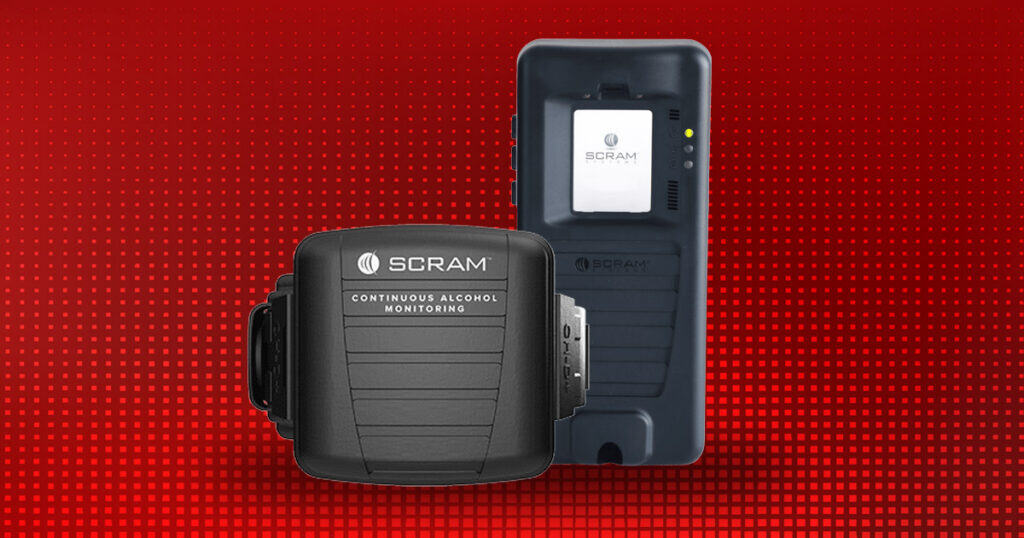
If a court has ordered alcohol monitoring as part of your case, you may have heard about SCRAM CAM and remote breath monitoring devices and wondered what sets them apart. Both track whether you are drinking alcohol, but how they work, what using one looks like day to day, and when courts choose one over the other are very different things.
Here is a plain-language breakdown of both approaches so you know what to expect.
What Is SCRAM CAM?
SCRAM CAM stands for Secure Continuous Remote Alcohol Monitoring. It is an ankle bracelet that monitors alcohol passively. You wear it, and it works in the background without any action required from you.
The device measures alcohol through your skin. When you drink, a small amount of alcohol exits the body through perspiration. The bracelet sits against your ankle and samples that perspiration vapor every 30 minutes, around the clock. This process is called transdermal alcohol testing.
SCRAM CAM is also designed to distinguish between the alcohol you consumed and environmental sources like hand sanitizer, cologne, or cleaning products. That said, it is still best practice to avoid alcohol-based products near the device during your monitoring period.
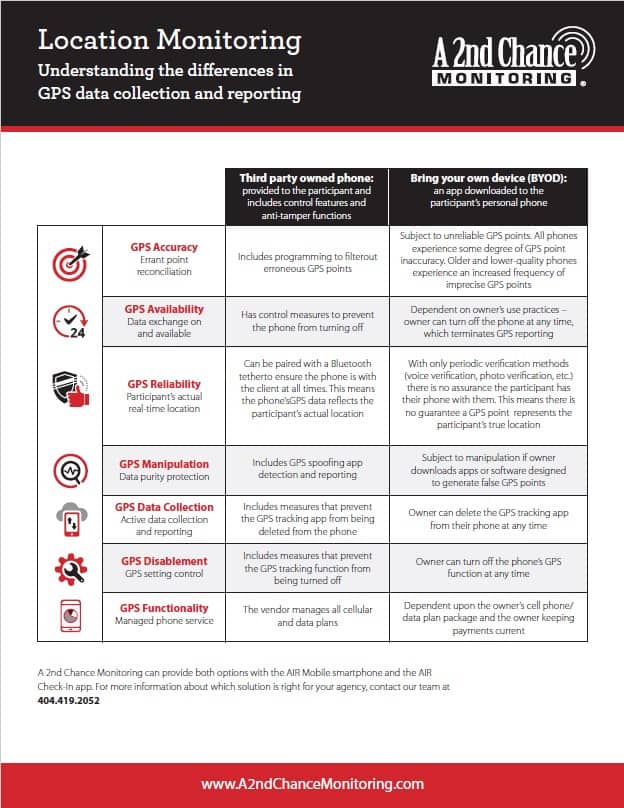
SCRAM CAM does not include built-in GPS. It monitors alcohol only. If a court also requires location tracking, a separate GPS ankle monitor would be ordered alongside it.
Every 30 minutes when a reading is taken, you will hear a faint buzzing from the device. That is normal.
What Is Remote Breath Monitoring?
Remote breath monitoring uses a handheld device rather than an ankle bracelet. You carry it with you, and when it prompts you to test, you blow into it. Tests can be scheduled at set times, triggered randomly, or sent on-demand by your supervising officer, depending on your program requirements.
Most remote breath devices use an electrochemical fuel cell to measure breath alcohol content. When you take a test, you blow into the device and a photo or facial scan is captured to verify that it is actually you providing the sample. Many devices use facial recognition software that compares the photo against your enrollment image.
Unlike SCRAM CAM, many remote breath devices do record a GPS location with each test and each missed test, which gives your supervising officer additional context when a compliance issue comes up.
Remote breath devices are compact and portable. They need to be kept charged and should be protected from water.
SCRAM CAM vs. Remote Breath Monitoring: Side-by-Side
| SCRAM CAM | Remote Breath Monitoring | |
| Form factor | Ankle bracelet (worn 24/7) | Handheld portable device |
| Testing method | Transdermal (sweat-based) | Breath (fuel cell) |
| Testing frequency | Every 30 minutes, continuously | Scheduled, random, or on-demand |
| Action required from you | None (passive) | Yes — blow into device when prompted |
| Identity verification | Worn on body; tamper detection | Typically photo or facial recognition |
| GPS included | No | Varies by device/program |
| Water exposure | Can handle brief exposure; avoid swimming/hot tubs | Varies; check with your provider |
| Typical use case | Higher-risk cases, total sobriety required | Lower-risk cases, less intensive supervision |
Which One Will a Court Order?
Courts and supervising agencies decide based on the individual’s risk level, the nature of the offense, and the level of oversight the court believes is appropriate. The choice reflects how closely a court wants to monitor alcohol use in a specific case.
SCRAM CAM Is More Likely When:
- The person has prior DUI convictions or a history of alcohol-related offenses
- The offense involved a high blood alcohol level or aggravating circumstances
- There is a history of alcohol abuse or failed prior treatment
- The court wants 24/7 continuous monitoring with no gaps
- The person is enrolled in a DUI court or specialty supervision program
- Complete sobriety is a condition of pretrial release or probation
Remote Breath Monitoring Is More Likely When:
- The person is considered lower-risk
- Less intensive monitoring is appropriate based on the offense and history
- A person has demonstrated compliance over time and earned reduced restrictions
- The supervising agency wants scheduled or random testing without continuous ankle monitoring
Courts can also order both types of monitoring at the same time when circumstances call for it. The final decision rests with the judge and the supervising agency.
What Both Approaches Have in Common
Even though SCRAM CAM and remote breath devices work differently, they share the same core purpose: verifying that you are not drinking alcohol. A few things are true of both.
- Any detected alcohol is reported. Whether it is a transdermal reading or a breath test result, a positive is flagged and sent to your supervising officer or the court.
- Missed tests are flagged. Failing to test when prompted is treated as a compliance issue.
- You are responsible for device maintenance. Keep the device charged and notify your provider of any technical issues.
- Tampering is a serious violation. Any attempt to interfere with either device is treated as a criminal matter, not just a program infraction.
- You pay for monitoring. Both programs typically involve a setup fee and ongoing monitoring fees. Costs vary by provider and program.
A Note on GPS and Alcohol Monitoring Together
SCRAM CAM does not include built-in GPS. Remote breath devices vary, but many do record location data with each test. If your court order requires both alcohol monitoring and location tracking, you may be fitted with a SCRAM CAM bracelet alongside a separate GPS ankle monitor.
For a full overview of how GPS ankle monitoring works, read our article What Is GPS Ankle Monitoring? A Complete Beginner’s Guide.
Frequently Asked Questions
What is the difference between SCRAM CAM and remote breath monitoring?
Does SCRAM CAM have GPS?
Does remote breath monitoring track your location?
Which is more accurate, SCRAM CAM or remote breath monitoring?
Can you drink alcohol while on either program?
The Bottom Line on SCRAM CAM vs. Remote Breath Monitoring
SCRAM CAM and remote breath monitoring are both alcohol monitoring tools, but they serve different supervision needs. SCRAM CAM gives courts continuous, passive, around-the-clock data through an ankle bracelet. Remote breath monitoring gives courts point-in-time breath test results through a portable handheld device.
Courts typically order SCRAM CAM for higher-risk cases where constant monitoring matters most. Remote breath programs are more common for lower-risk clients or as a step down from more intensive monitoring. The goal of both is the same: verifying sobriety and keeping you on track.
A 2nd Chance Monitoring provides SCRAM CAM across Georgia and Alabama. If you have questions about your program, how the device works, or what to do if a technical issue comes up, our team is here to help. Learn more about our alcohol monitoring options or call 404.419.2052.
If you are also navigating a new arrest alongside a monitoring program, the team at A 2nd Chance Bail Bonds serves Metro Atlanta and Birmingham and is available 24/7.
About A 2nd Chance Monitoring
We believe everyone deserves a second chance. A 2nd Chance Monitoring provides alcohol monitoring, GPS tracking, and communication services to help individuals stay accountable while they navigate legal requirements or work toward personal goals. With multiple locations across Georgia and Alabama, our team offers professional support and reliable technology you can count on 24/7. Whether you’re fulfilling a court order or simply looking for structure during a difficult time, we’re here to help. Get in touch with us today.
Legal Disclaimer
The information in this article is provided for general educational purposes only and does not constitute legal advice. Alcohol monitoring programs and device requirements vary by jurisdiction, supervising agency, and individual court order. Laws, procedures, and requirements can change, and individual circumstances vary. If you have specific legal questions about your monitoring conditions or case, please consult a licensed attorney. A 2nd Chance Monitoring is not a law firm.