Most people don’t think much about electronic monitoring until they need it. Then, all of a sudden, the questions pile up fast.
How does the monitoring actually work? Who is watching? What happens if something goes wrong at midnight on a Saturday? Is the company that got assigned to this case actually going to be there?
Those are the right questions. And the honest answer is that it depends entirely on which electronic monitoring company in Georgia you are working with.
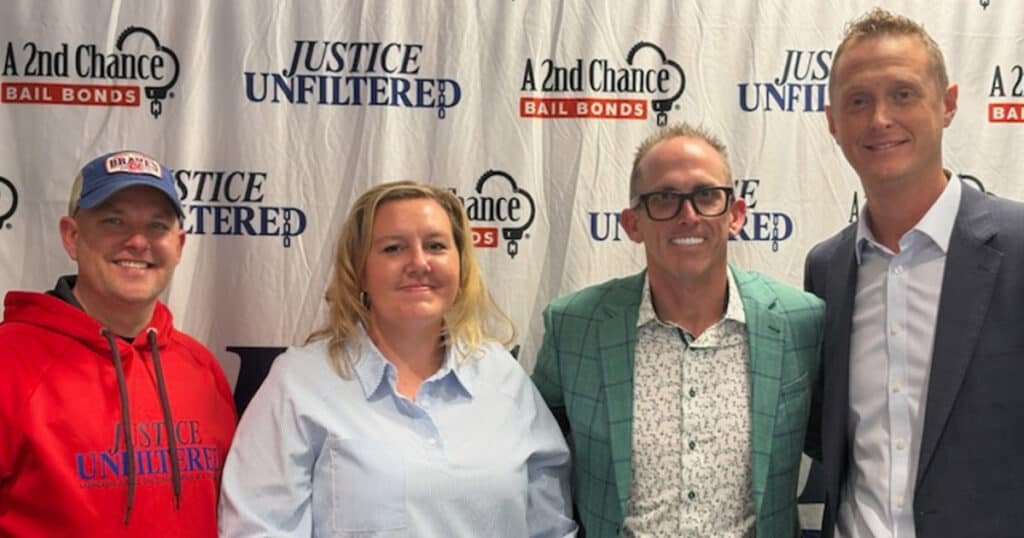
A 2nd Chance Monitoring has spent years building an operation designed to answer those questions the right way. And, in the latest episode of the Justice Unfiltered podcast, John Hays, President of JSG Monitoring, and Lyndi Schmidt, Director of Operations at A 2nd Chance Monitoring, sat down to talk through what good monitoring actually looks like and how to recognize whether a provider is doing the job correctly.
Not All Electronic Monitoring Companies Are the Same
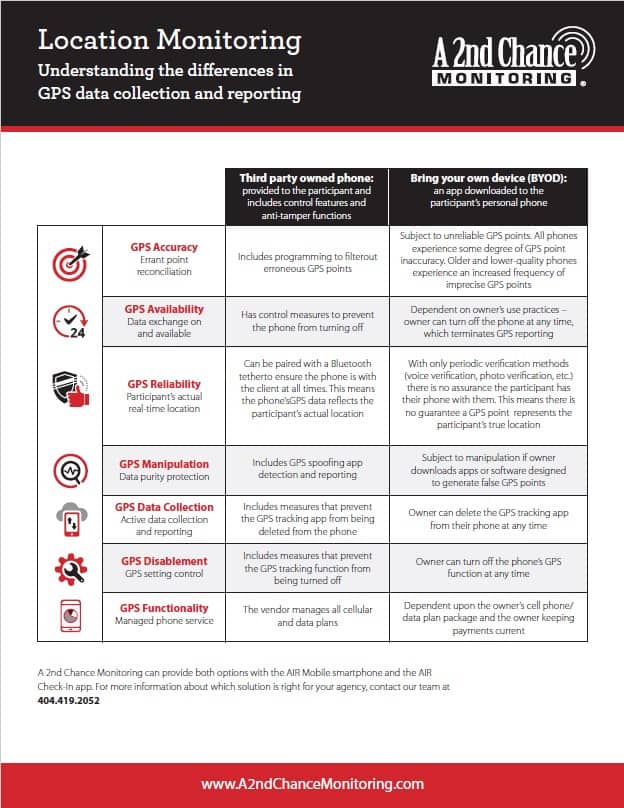
Here is something most people don’t realize. The GPS device on someone’s ankle tells you very little about how well they are being monitored. The same device appears across dozens of providers. What is different is everything behind it.
John Hays, a 15-year veteran of the electronic monitoring industry, put it plainly during the above episode:
“A lot of providers carry the same equipment. But a lot of providers aren’t answering the phone at 2:30 in the morning.”
That gap, between having the technology and actually running it the right way, is where courts, defendants, and victims get let down.
A 2nd Chance Monitoring is one of the few providers in Georgia, Alabama, and Mississippi that has invested in the infrastructure to close that gap. Here is what that looks like in practice.
What 24/7 Monitoring Really Means
The phrase “24/7 monitoring” gets used a lot in this industry. It is worth being specific about what it actually requires.
Real 24/7 monitoring means a trained staff member is actively watching client dashboards, GPS data, and alert systems around the clock — not just during business hours. It means when a curfew is violated at 11:45 PM on a Sunday, someone is notified, documentation is started, and the appropriate contacts are reached. It does not mean a phone that rings to voicemail after 5 PM.
Lyndi Schmidt described how the company built toward this standard from the beginning. In the early days of the program, she and her husband were personally monitoring dashboards on their personal phones around the clock. As the company grew, Daniel Matalon made the investment to staff the operation properly before the volume demanded it, because the alternative was cutting corners on something that directly affects public safety.
The result is a monitoring operation that courts across Georgia can actually rely on. When a judge issues an order, A 2nd Chance is watching.
How A 2nd Chance Monitoring Works With Courts
Being a monitoring company means being a reporting agency. When a client violates their conditions, A 2nd Chance Monitoring documents it and notifies the court. That sounds straightforward, but it requires a level of precision that many providers underestimate.
Each judge writes different orders. What counts as a violation for one client may not apply to another. Knowing the difference and capturing the right data to support a report is a skill that takes real training to develop.
A 2nd Chance Monitoring only brings a violation to court when the team is fully confident in the data. As John Hays described in his court training work with the A 2nd Chance team, if they are 95% sure a violation occurred, they say so, but they do not send someone to jail on a 5% doubt.
Court Testimony Preparation
As A 2nd Chance Monitoring grew, courts began requesting the team to testify more frequently. Lyndi Schmidt partnered with John Hays and JSG Monitoring to build a formal court training program specifically for the A 2nd Chance team.
The training covers preparation, documentation review, how to present GPS data clearly, and how to respond under cross-examination. The goal is simple: anyone on the A 2nd Chance team who takes the stand should be able to speak to what the technology shows, and only what the technology shows.
Device Selection Based on the Case, Not the Contract
A 2nd Chance Monitoring does not rely on a single manufacturer’s product line. Through its partnership with JSG Monitoring, the team has access to the best GPS devices, alcohol-monitoring tools, and wrist-worn units from multiple manufacturers.
That means the device selected for each client fits the specific conditions of their case and the requirements of their court order. Not every monitoring situation is the same, and a good provider should not treat them all the same.
The JSG Partnership: What It Means for Clients and Courts
A 2nd Chance Monitoring’s relationship with JSG Monitoring is one of the things that sets the program apart. JSG works with monitoring companies across the country, bringing 15 years of operational knowledge, device expertise, and industry relationships to every partnership.
For A 2nd Chance Monitoring, that partnership has meant:
- Faster operational ramp-up than companies that have been in the industry for decades
- Access to court training resources, most providers build slowly on their own over the years
- Guidance on which devices fit which case types, rather than defaulting to one product
- Mentorship on the mistakes that take years to learn the hard way
John Hays described A 2nd Chance’s growth as unlike anything he has seen from companies with far longer track records. That is not an accident. It reflects the foundation Daniel Matalon and Lyndi Schmidt built, combined with the depth of knowledge that a partnership like JSG brings to the table.
What the National Association of Service Providers Means for This Industry
One of the most important conversations in the Justice Unfiltered episode centered on a problem most courts and attorneys don’t realize exists: there is currently no governing body that certifies or audits electronic monitoring companies.
Anyone can start a monitoring company. Anyone can buy GPS devices and offer monitoring services at a lower price. Courts have no formal way to verify whether a provider is actually operating 24/7, following best practices, or maintaining the documentation standards required for court testimony.
John Hays is working to change that. The National Association of Service Providers is a national organization being built to establish written best practices for common monitoring scenarios, create certifications for providers who meet those standards, and conduct independent audits of member organizations.
A 2nd Chance Monitoring is aligned with the association’s standards. For courts and attorneys in Georgia, Alabama, and Mississippi, that means working with a provider that is accountable to a documented standard. It’s not just a verbal promise.
Who Can Benefit From Working With A 2nd Chance Monitoring
The short answer is: anyone in the criminal justice system who is looking for a real alternative to incarceration and needs a monitoring company they can actually rely on.
Specifically, A 2nd Chance Monitoring works with:
- Superior court and accountability court judges looking for vetted monitoring providers
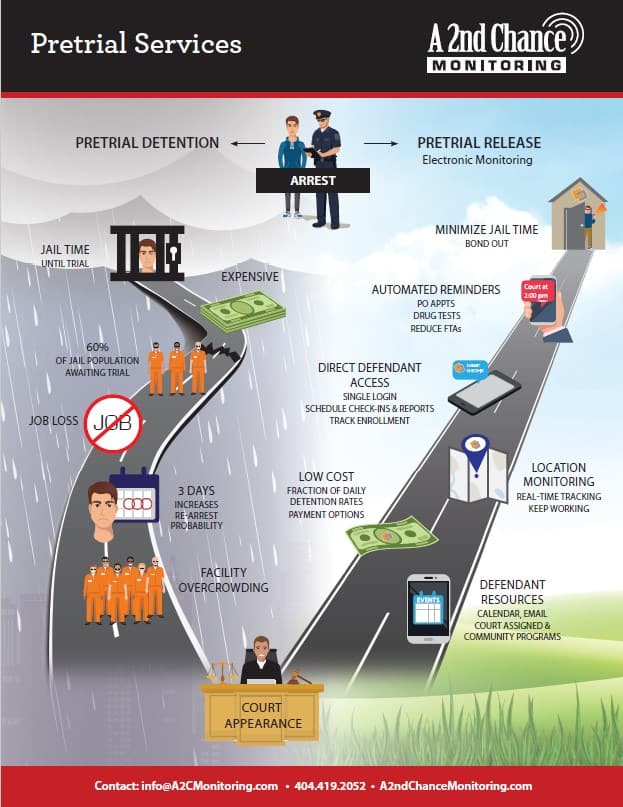
- Criminal defense attorneys seeking GPS monitoring as a condition of pretrial release or bond
- Probation and parole programs needing reliable 24/7 supervision
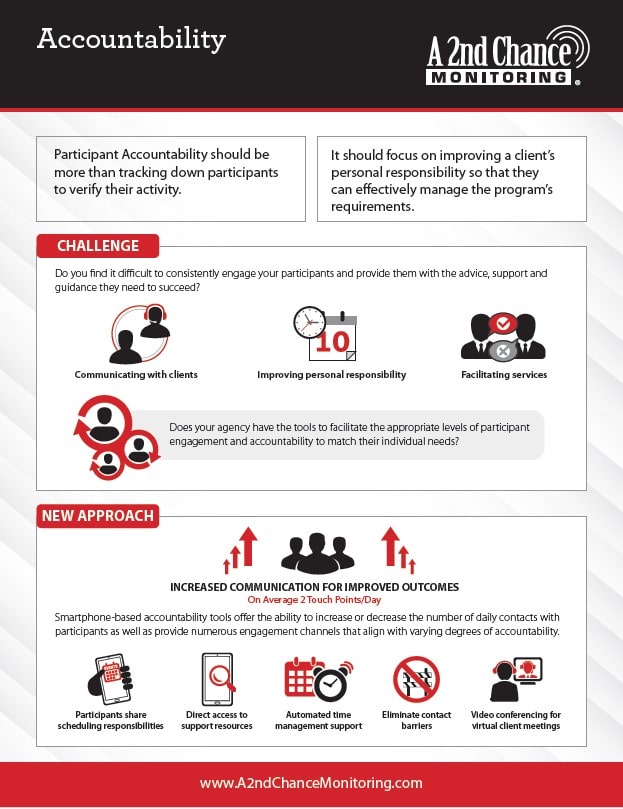
- Recovery and reentry organizations incorporating accountability tools into their programs
- Court clerks and administrators coordinating monitoring orders across multiple defendants
Lunch-and-learn sessions are available for any criminal justice professional who wants to understand the technology in more detail. The A 2nd Chance Monitoring team will come to you.
Ready to Learn More About Electronic Monitoring in Georgia?
A 2nd Chance Monitoring serves clients across Georgia, Alabama, and Mississippi. The team is available 24 hours a day, 7 days a week — not just when it is convenient.
If you are a judge, attorney, court administrator, or reentry professional who wants to understand how A 2nd Chance Monitoring works, or if you are exploring monitoring options for a specific case, reach out directly at 404-419-2052.
The right electronic monitoring company in Georgia is not just the one with a GPS device and a low price. It is the one that will still be watching at 2:30 in the morning.
About A 2nd Chance Monitoring
A 2nd Chance Monitoring is Georgia’s provider of advanced electronic monitoring services. A sister company to A 2nd Chance Bail Bonds, the company serves supervisory agencies, specialty courts, and defendants across Georgia, Alabama, and Mississippi. A 2nd Chance Monitoring offers GPS location monitoring, RF curfew monitoring, alcohol monitoring, and mobile check-in solutions designed to keep communities safe while helping individuals meet their court-ordered obligations.